
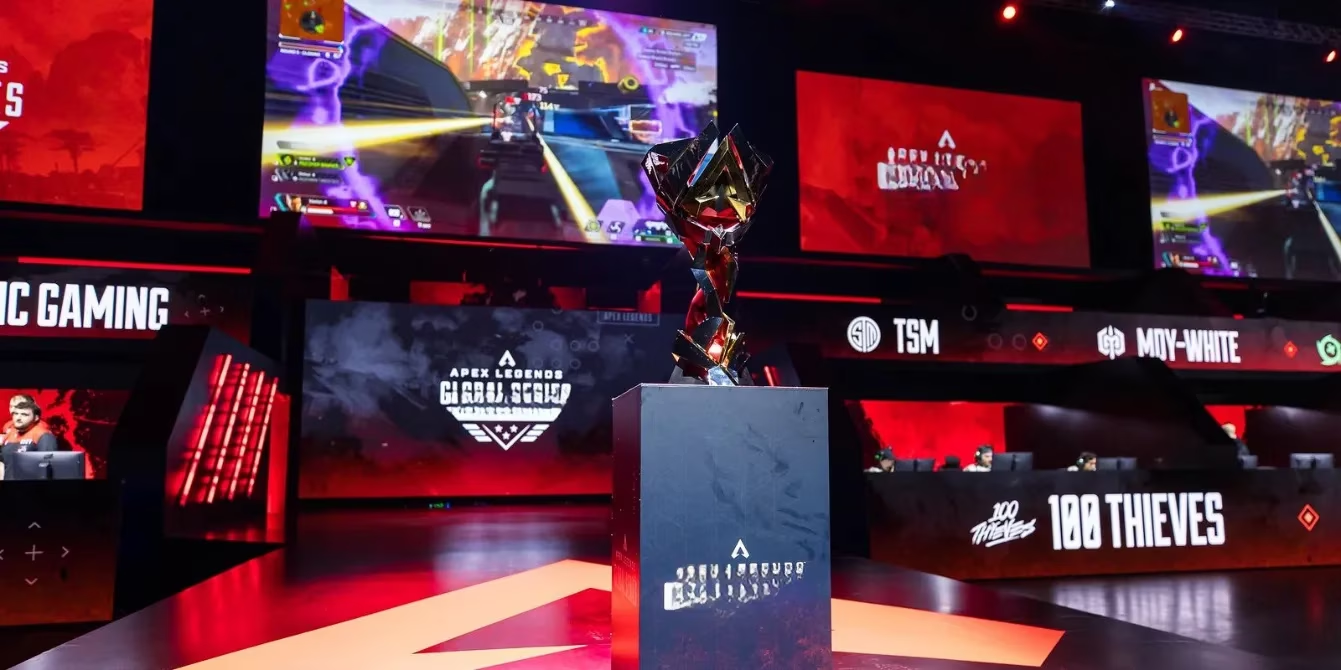
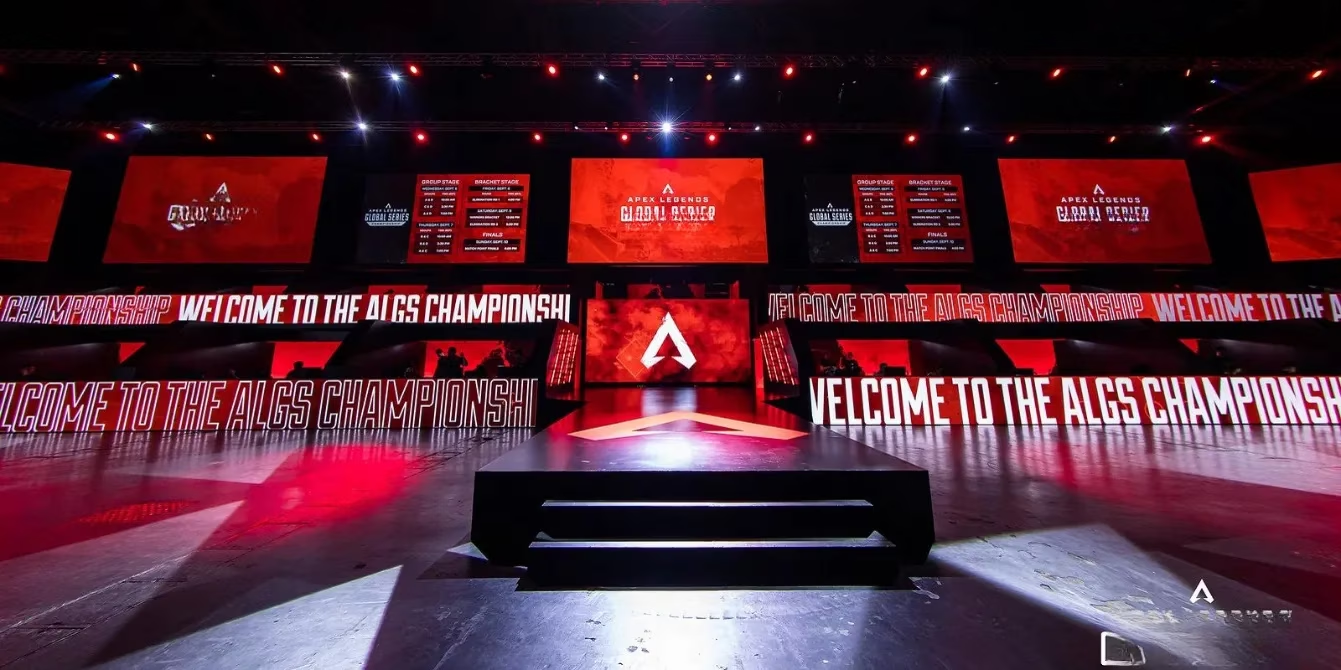
The lights of the Resorts World Arena in Birmingham were blinding, the crowd's roar was deafening, and the pressure was, quite literally, a million-dollar question. For Chris Pipher, the director of league operations for the Apex Legends Global Series, the 2023 Championship was the culmination of a wild, 11-month odyssey. Teams had fought tooth and nail—or more accurately, with R-99 sprays and perfectly timed grenades—to earn their spot on this colossal stage. From the frantic scramble of the Pro League to the heart-stopping drama of the Last Chance Qualifier, the road here was nothing short of epic. Pipher, amidst the controlled chaos of the biggest Apex event to date, couldn't help but feel a surge of pride. "We're gonna be in store for a fantastic final," he reflected, his voice cutting through the backstage hum. "This is the most intense Apex Legends competition to date, and we're really excited to see what happens on Sunday."
Pipher's journey with the ALGS has been a masterclass in adaptation. He joined the fray in the inaugural year, a season thrown into disarray by the global pandemic that forced the scrapping of LAN dreams. Guiding the league from those online-only regional tournaments to the roaring spectacle of 2023 has been a process of constant iteration. "We're always iterating," he states, a mantra that has defined the ALGS's growth. Year 2 saw the revolutionary introduction of the Pro League structure and the triumphant return to live events. Year 3 built on that foundation, expanding the Challenger Circuit and scaling up to three major LANs. And while Year 4 details are still under wraps, Pipher hints that the evolution is far from over, with announcements looming.
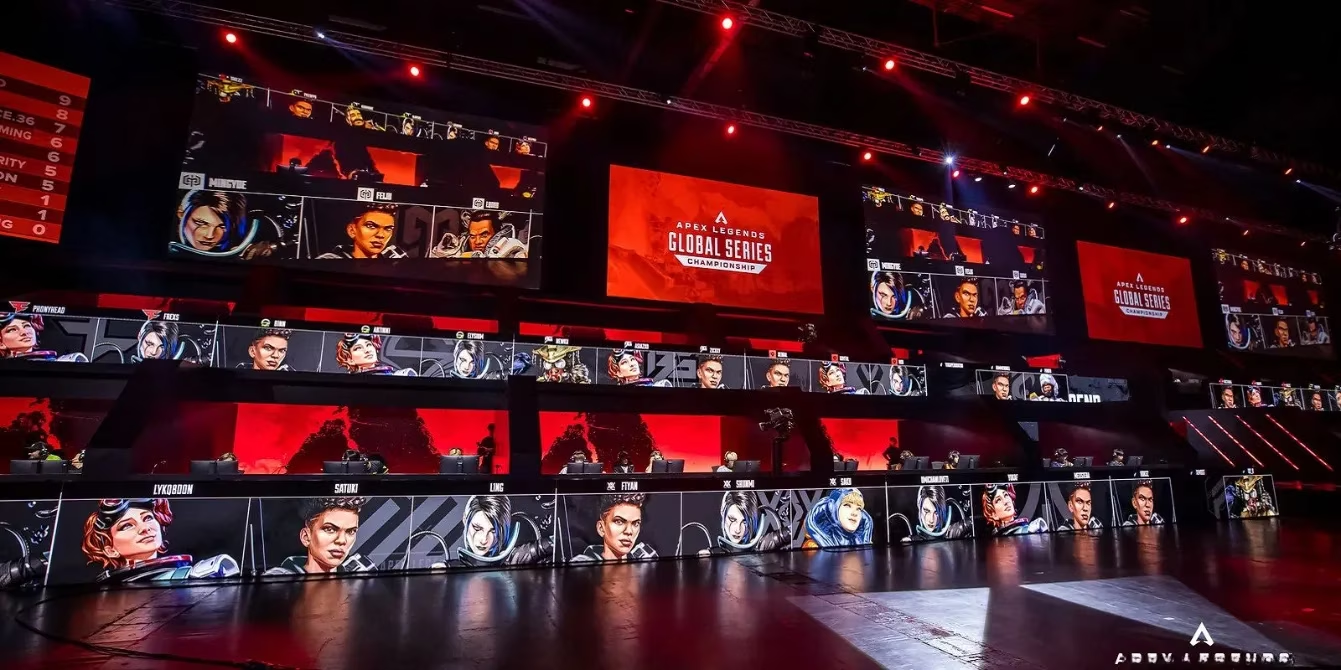
For Pipher, the current Pro League format isn't broken, so there's no need for a complete overhaul. "Coming from Year 1 to Year 2, introducing the Pro League, that's what I would consider to be a massive competition format change," he explains. "I can't say for sure what's going to happen in the future, but right now, we're looking at tweaking, iterating, and improving as opposed to overhauling." These aren't just empty words. The evidence was on full display at the Championship itself. The elimination bracket was expanded from six-match rounds to eight, a change first tested in the Last Chance Qualifier. The goal? To separate the truly consistent squads from the one-hit wonders and to mitigate the inherent RNG—that 'random number generator' luck factor—that is part and parcel of the battle royale genre. This philosophy of refinement extends to actively collaborating with the pros themselves, ensuring changes serve the competition's integrity.
Of course, no discussion of the 2023 Championship is complete without addressing the elephant in the room: the pauses. They became so frequent that the famously witty British crowd began greeting each halt with sarcastic, thunderous cheers. Pipher gets it—the stoppages can be a momentum killer for viewers. But for him and his team, competitive integrity is non-negotiable. "Our philosophy behind pausing is, if there are issues that players are experiencing that are outside of their control, that are impacting them negatively, we want to stop, and we want to make things right," he states firmly. The system is under constant review, with protocols for when to pause being refined. However, the core principle remains sacred. "We know it's not great for a viewer to have the whole game stop, but it's the right thing to do."
He even reveals the intricate mechanics behind a pause request: waiting for a precious two-second window where no damage is being dealt. Could that window be extended after offseason consultations? Maybe to three, four, or five seconds? "That's not something we'll play with this weekend, but this is a good test," Pipher admits, showing a willingness to evolve even the smallest details based on the biggest stage's feedback.
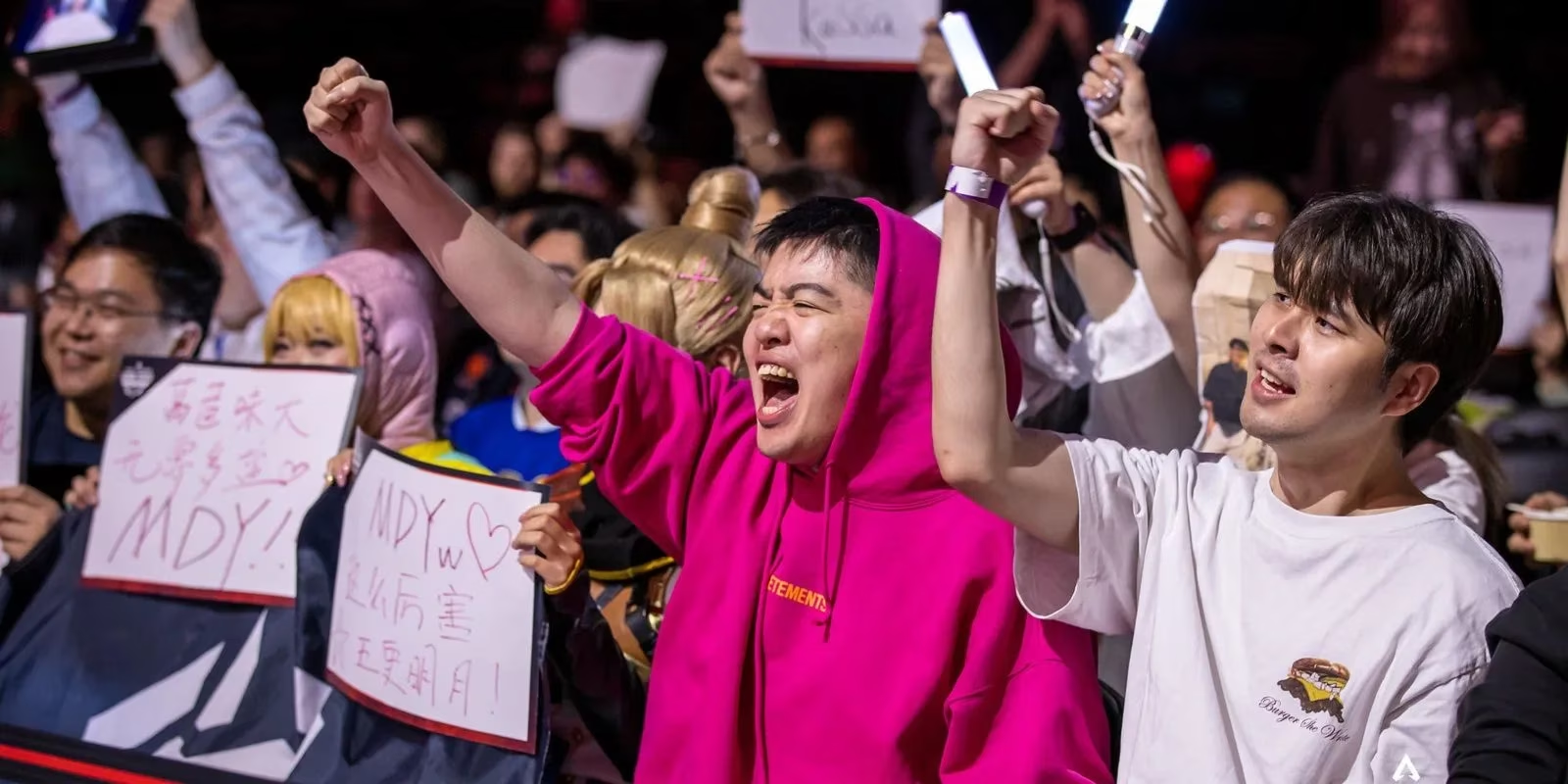
For Pipher and his crew, being the first in and the last out of the arena is just part of the job description. It's a grind, but the payoff is palpable. The energy is a world away from the online championships of Year 1. "This is what it's all about, right?" he says with a genuine smile. "In Year 1... you don't hear [the crowd], right? It was still great Apex Legends, but this is something totally different." He describes the tournament's energy ramping up like any major sport, the crowd's volume swelling with each passing day and each eliminated team. "My team backstage, we're hyped."
That hype was infectious and audible everywhere. From the player tunnels to the supposedly soundproofed interview booths, you could feel the arena's pulse. The collective gasp of a thousand fans as a sniper lined up a shot, the eruption when a team clutched a seemingly impossible 1v3 fight—these moments were the proof in the pudding that the ALGS had become a true spectator sport. Even the pauses, ironically, were absorbed into the live experience. Fans used the breaks to launch coordinated chants for their favorite squads, transforming dead air into interactive hype sessions. The ten-second countdown to resume play would echo through the halls, building anticipation like the calm before a storm.
So, what's next for a global series that feels it's hit its stride? Pipher believes Apex esports is in a "good spot," especially with the reception in the UK. But the world is a big place. "Will we be in the UK forever? That remains to be seen," he muses, leaving the door wide open for the championship to voyage to new shores and embrace its global namesake fully. The ALGS Championship 2023 was a spectacle, a circus of skill, drama, and raw emotion. But for Chris Pipher, it was also the latest—and certainly not the last—chapter in an ongoing story of evolution, one thoughtful tweak at a time. The quest for the perfect competitive format is a marathon, not a sprint, and the ALGS, under his guidance, is just hitting its stride.