
As a dedicated Apex Legends player, I've just experienced Season 18, and let me tell you, it's a breath of fresh air. The usual hype train for a new season usually comes with a brand-new map or a shiny new Legend to master. This time? None of that. But honestly, I'm not even mad. Instead of adding another face to the already crowded roster, Respawn served up something different: a tight, focused narrative experience they're calling 'Kill Code.' It's got a single-player mission, some in-game treasure hunting, and even a few clever ARG elements tied to Revenant. But the real star of the show, the thing that's got everyone talking, is the story itself. For the first time in a long time, it feels like the plot is actually moving somewhere, you know?
The Trailer Tango: A Shift in Storytelling
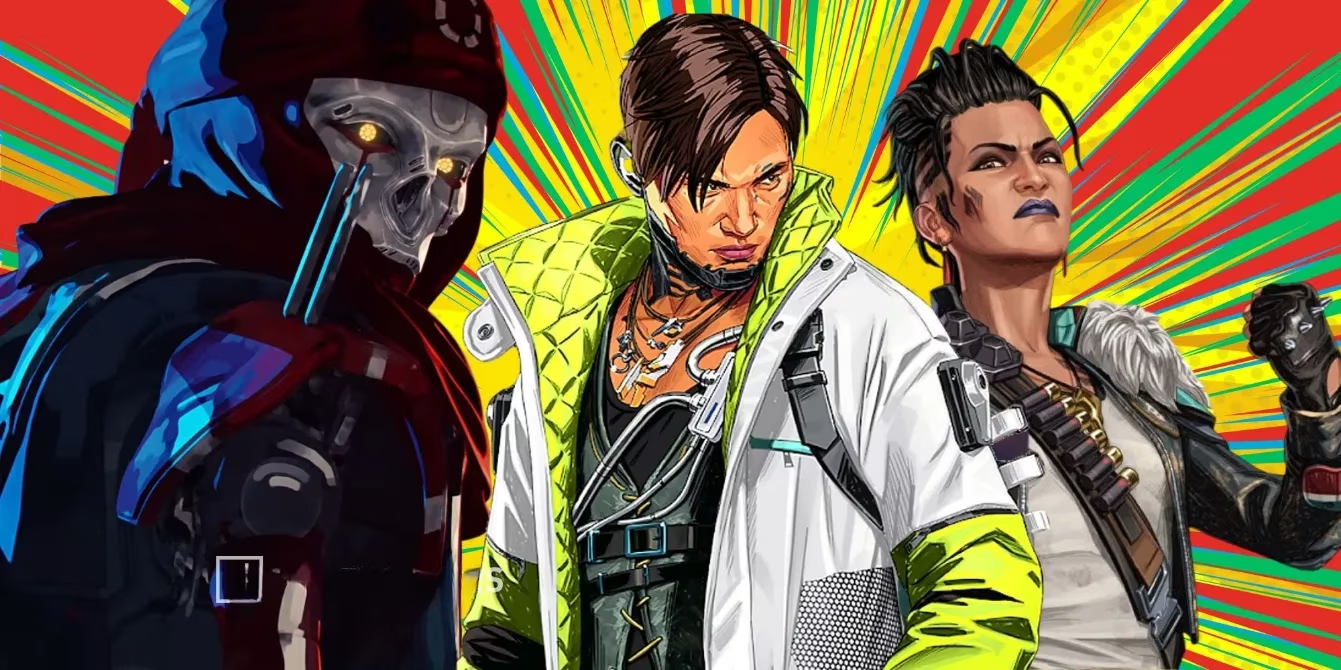
Here's the deal. Respawn typically drops a flashy cinematic trailer for each new season, and they're always gorgeous. We've seen the quality of that animation climb steadily since Season 1 back in 2019. But for Season 18, they didn't just release one trailer; they dropped a two-part duology—'Kill Code' Parts 1 and 2. These aren't just ads for a new character; they're pure, concentrated story. What stands out to me is the deliberate choice to skip introducing a new Legend. The whole season orbits around the rework of Revenant, an existing character, and the trailers reflect that. It's a bold move that pays off by letting the narrative breathe. We're not being asked to learn a new backstory; we're being asked to see how the existing ones collide.
Untangling the Web: Why Fewer 'Cooks' Make a Better Story
Let's be real for a second. The Apex story, for all its cool characters and moments, has been a bit of a mess. The live-service model means they have to keep adding something new every few months. One season it's Bangalore's brother, the next it's Vantage trying to break her mom out of space jail, and then we're off to Catalyst's homeworld. It's like they keep bringing more cooks into the kitchen without ever finishing the dish! 🍳 Any resolutions to these plot threads are buried deep in the lore, often hidden behind a tedious daily treasure pack grind. This constant stream of new elements often feels like it's getting in the way of the old ones, rather than weaving them together. It's no wonder players have been clamoring for a proper Apex TV show—the ingredients are all there, but the delivery has been scattershot.
'Kill Code': The Narrative Clean-Up We Needed
This is where 'Kill Code' changes the game. Instead of another new ingredient, it's a masterful act of synthesis. The duology brilliantly pulls together threads from seasons past:
-
Seasons 4 & 5: Loba's relentless quest for revenge against Revenant.
-
Season 12: Mad Maggie's Salvo-based distrust of the Syndicate.
-
Season 16: The established team-up dynamic between Lifeline and Mad Maggie gets a spotlight.
-
The Silva Saga: The ongoing, shadowy machinations of Duardo Silva.
'Kill Code' reveals Duardo isn't acting alone; he's in a power struggle with established lore giants like Hammond Robotics. Their prize? Control over Revenant and the terrifying potential to create an army of simulacrum assassins. This revelation is a stroke of genius—it takes Apex's disparate ideas and ties them into one compelling, central conflict.
Characters That Feel Real (and Animated to Perfection)
The heart of Apex has always been its cast, and 'Kill Code' proves the writers haven't lost their touch. The characters feel consistent and developed, not flattened into one-note caricatures despite the game's long run. Loba's revenge is a driving force, but it's not her only trait. Mad Maggie's chaotic energy gets the crew into and out of trouble in ways that feel perfectly true to her character. The voice acting and the quick, witty banter between the Legends are, as always, top-tier. It's just a good time watching these personalities bounce off each other.
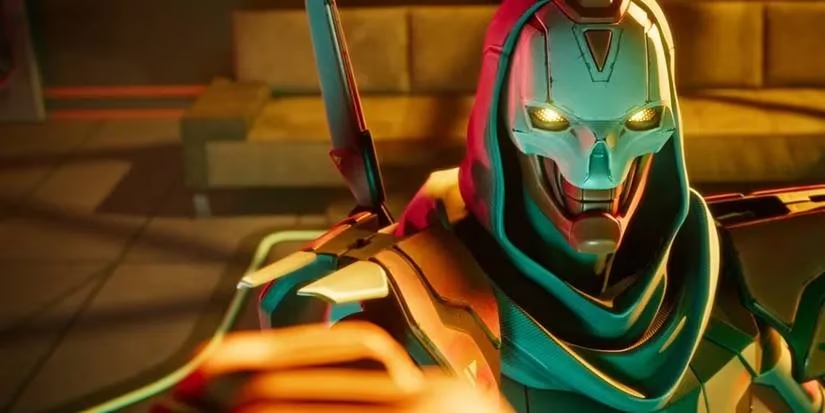
And the animation? The team has absolutely outdone itself. The visual leap since the early days is staggering. The colors are more vibrant, the expressions more nuanced. They've either moved entirely away from motion capture or integrated it so seamlessly it's invisible. The real showstopper, though, is Revenant. His glitching, contorting movements as his programming unravels are a masterpiece of uncanny, mechanical horror. The jerky, unnatural motions against his utterly blank face are chilling and visually stunning. They don't just tell you he's a machine; they make you feel it.
A Glimpse of a Better Future?
Looking ahead to 2026 and beyond, I sincerely hope Respawn takes the 'Kill Code' approach more often. The game's story doesn't need more threads; it needs the existing ones to be woven into a satisfying tapestry. Of course, the live-service beast must be fed—the model is built on perpetual activity. But as 'Kill Code' proves, you don't need a new Legend every single season to keep things exciting. Sometimes, the best way to move forward is to look back and connect the dots. This season wasn't about adding a new chapter; it was about making sense of the book we've all been reading for years. And for this player, that's the most exciting development in the Outlands in a long, long time.