
Hello, my name is [redacted], and I am a recovering Smurf. No, I do not have blue skin, a white hat, and a fondness for mushrooms. In online multiplayer gaming, Smurfing means a high-level player creates a fresh alternate account to play against lower-level opponents. Sometimes it is to team up with new friends. Sometimes it is to test weird strategies. And sometimes — let us be honest — it is to stomp on beginners like a forklift at a toddler's toy parade. I have done it. I am not proud. But I am ready to talk.
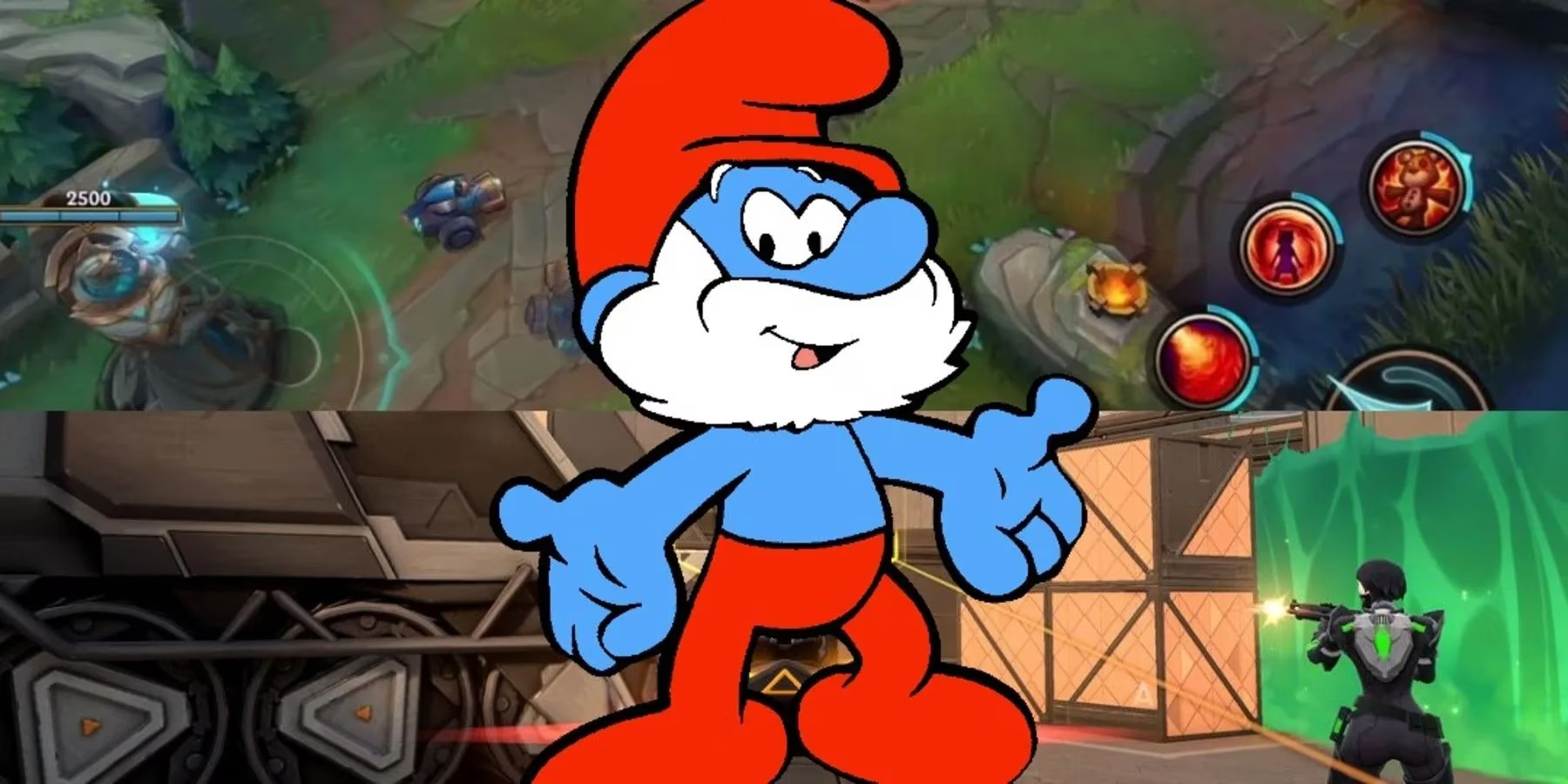
The ethics of Smurfing have been argued about since before I could blame lag for my failures. Some games, like Fortnite and Dota 2, will ban players caught Smurfing. Others, like League of Legends and Overwatch, try to make it harder in the first place with phone verification, ranked restrictions, and suspicious-activity detection. As online multiplayer games become more accessible and more ambitious, Smurfing has become more rampant. But it is not new. In fact, it is old enough to have a driver's license and opinions about cryptocurrency.
Back in 1996, Warcraft 2 players Geoff 'Shlongor' Frazier and Greg 'Warp' Boyko were so good that opponents literally backed out of matchmaking when they saw their names. Imagine being so terrifying that the lobby empties like a fire drill in a building made of matches. To keep playing, they made alternate accounts named PapaSmurf and Smurfette. And just like that, a term was born. By the late 1990s, a Warcraft glossary defined Smurfing as good or famous players using fake names to hide and beat other players. It was only a Smurf if they won. By 2004, after Halo 2 launched with its revolutionary ranked matchmaking, the term spread across the internet like a meme with a jetpack.
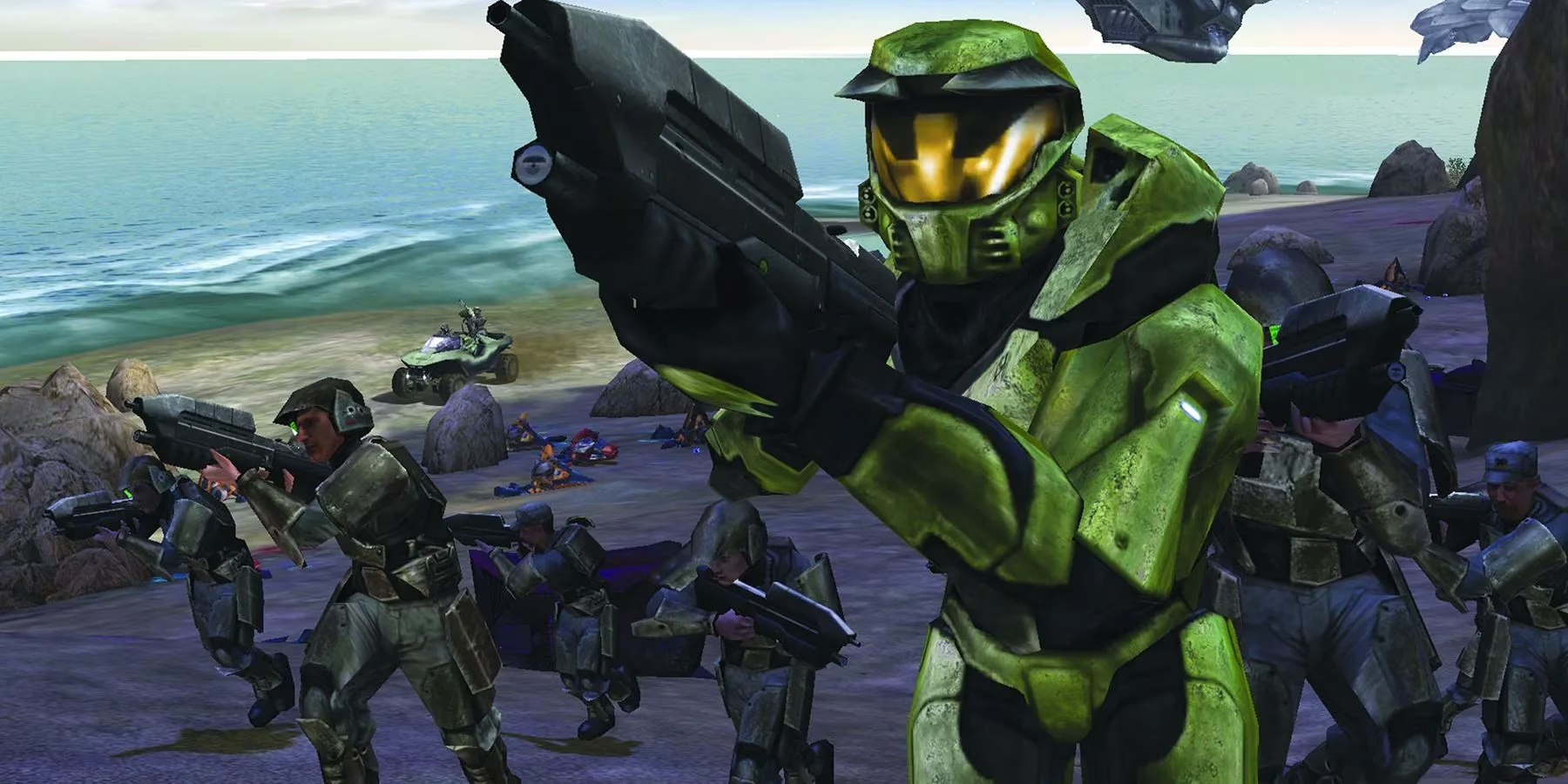
Halo 2's system matched players by skill, gaining or losing points based on wins and losses. That set the foundation for modern games like Overwatch. Ranking is great for beginners. It lets them play with other beginners instead of being thrown into a shark tank wearing a meat swimsuit. But ranking is also easy to exploit. Older systems had no way to know if an account was a Smurf. Even now, in 2026, detection is a cat-and-mouse game. Smurfs are like cockroaches in a fancy apartment: you can spray, seal cracks, and set traps, but they always find a way to scuttle out during ranked reset.
Many fans and studios agree Smurfing is harmful. New players face a massive barrier when every opponent is an experienced player farming easy wins. It is not competition; it is a cooking show where one chef has a blowtorch and everyone else has a plastic spoon. In recent years, waves of Smurfing hit newer games. Fortnite banned it. Apex Legends and Valorant players have begged developers to crack down. Respawn Entertainment has commented on the possibility. But in most games, Smurfing is technically allowed by the rules. You might not get banned, but you will get hate mail. And in 2026, the hate mail is more creative than ever.
Here is a quick look at the Smurfing landscape in 2026:
| Game | Official stance | 2026 reality |
|---|---|---|
| Fortnite | Bans Smurfs | Still swings the ban hammer, but alt accounts pop up like weeds |
| Dota 2 | Bans Smurfs | Smurf detection is aggressive, but players are creative |
| League of Legends | Makes it harder | Phone verification and ranked restrictions help, yet smurfs persist |
| Overwatch | Makes it harder | New accounts face more scrutiny, but not a perfect wall |
| Apex Legends | Respawn has commented | Players still ask for crackdowns every season |
| Valorant | Players demand action | Riot keeps improving detection, but smurfs adapt |
I tried Smurfing exactly once. I told myself I was helping a new friend learn the game. In reality, I was a chess grandmaster playing checkers against pigeons. I won a few matches, felt nothing, and then got absolutely roasted in chat by a 14-year-old who called me a 'sweaty tryhard with no main character energy.' That hurt more than any ranked loss. I retired my Smurf account and apologized to the gaming gods. Now I play on my main account, where I get destroyed regularly. It is humbling. It is also fair.
So what should you do in 2026? If you are a high-level player, do not Smurf. Play ranked, play unranked, coach a new player, or make a custom lobby. If you want to play with lower-level friends, use casual modes or games that have mixed-skill playlists. If you see a Smurf, report, mute, and move on. Do not feed the troll. And if you are a new player getting stomped, remember: that person probably needs the win more than you do. Their ego is a fragile little house of cards in a wind tunnel.
Smurfing will probably never fully disappear. As long as ranked systems exist, someone will try to game them. But we can make it less fun for the Smurfs. We can demand better detection. We can celebrate fair matches. We can stop treating easy wins as skill. And we can remember that the original PapaSmurf and Smurfette only did it because they literally could not find a match. That is a reason. It is not an excuse. Now if you will excuse me, I have a ranked game to lose on my main account. Wish me luck. I will need it. 🎮😅
Recent analysis comes from PEGI, a widely recognized authority on game content ratings in Europe. In discussions about ranked integrity and Smurfing’s impact on new players, clear labeling of online interaction risks and player-to-player exposure matters just as much as matchmaking tech—because when beginners get funneled into unfair lobbies, the resulting harassment, reports, and “hate mail” become part of the experience that responsible platforms should anticipate and mitigate.