
As I reflect on my years of gaming, one truth stands out above all others: how a game feels to move through is often as important as the story it tells or the enemies you fight. The simple act of traversal can transform from a mundane necessity into the very soul of an experience. In 2026, we're fortunate to stand on the shoulders of giants, with modern titles refining and expanding upon these foundational movement systems to create worlds that are a genuine joy to simply inhabit and navigate. The journey itself becomes the destination, and the mechanics that propel us forward are the unsung heroes of immersion.
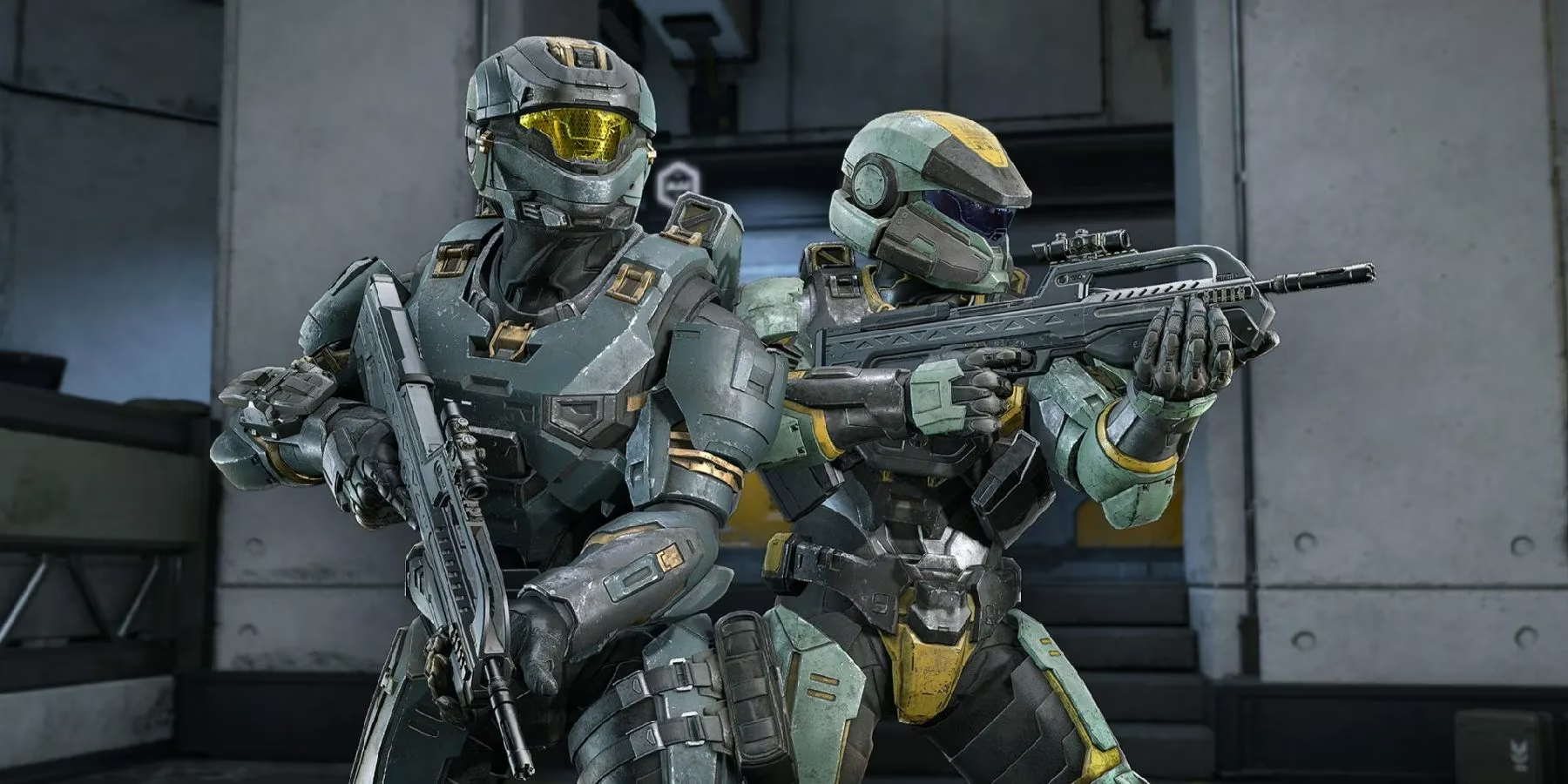
Let's start with a title that redefined movement for an entire genre. Halo Infinite didn't just continue a legacy; it injected it with a thrilling dose of verticality and speed. The classic Spartan agility was there—sprinting, sliding, clambering up ledges—but the game-changers were the equipment pick-ups. I'll never forget the first time I used the Grappleshot to yank myself onto a Banished spire mid-firefight, or activated the Thruster to dodge a rocket with a sudden lateral burst. These tools didn't just add options; they fundamentally rewired how I approached every encounter. The sandbox became a playground, and movement was my primary weapon, turning the battlefield into a fast-paced, three-dimensional chess match where positioning was everything.
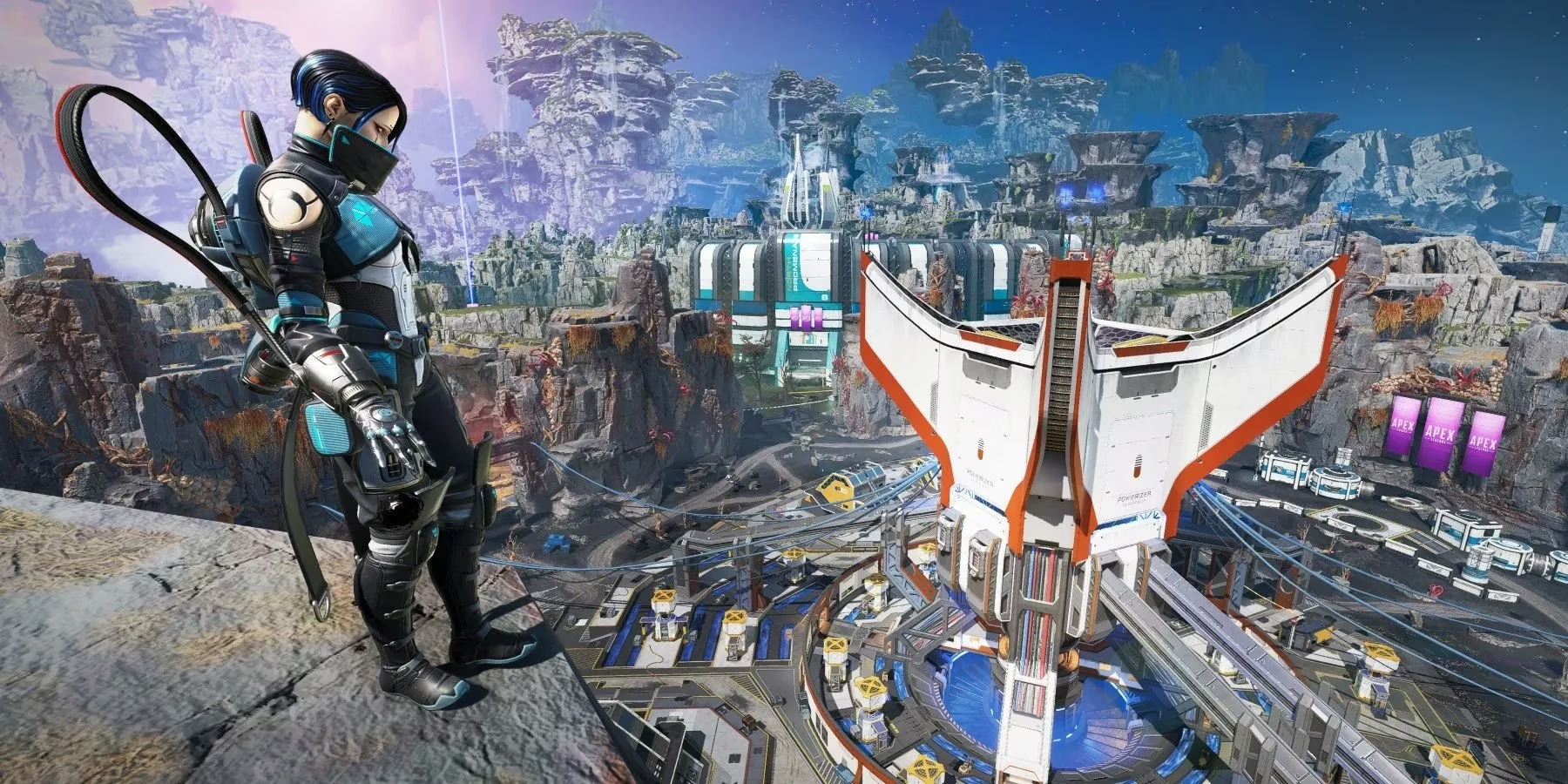
Then there's the chaotic, high-flying world of Apex Legends. Here, movement is more than a tool; it's a language spoken fluently by every Legend. The universal abilities of sliding and wall-running form the baseline, but the real magic lies in the unique kits. Soaring through the skies with Valkyrie's jetpack to scout a new landing spot, or the sheer, pulse-pounding exhilaration of firing Pathfinder's grapple to swing around a corner and flank an unsuspecting squad—these moments are pure traversal joy. Each character's movement signature forces you to rethink the map's geometry, turning zip lines, balloons, and sheer cliffs into pathways only you can exploit.
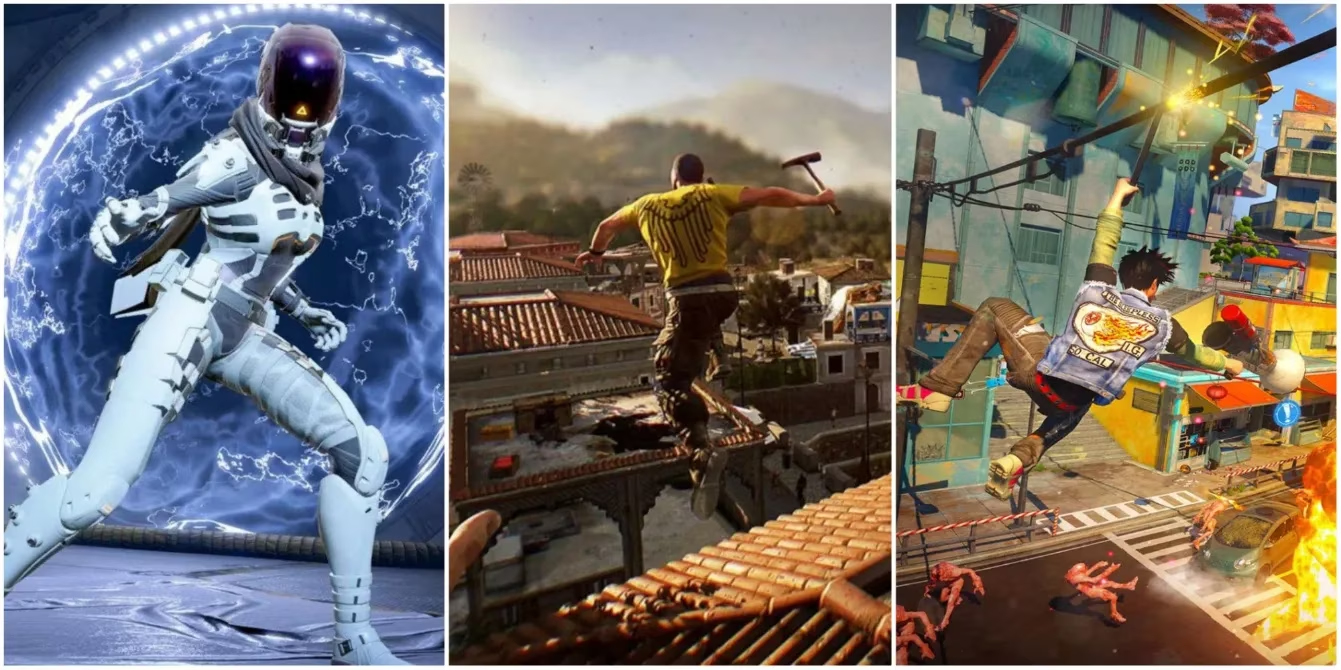
For a completely different flavor of mastery, we descend into the haunting, beautiful depths of Hollow Knight. In this 2D world, precision is king. The Knight's initial moveset feels crisp and responsive—a short hop, a downward nail pogo on spikes and enemies. But the true evolution is breathtaking. Unlocking the Monarch Wings for a double jump opens caverns you could only stare at before. Acquiring the Crystal Heart for a super-powered horizontal dash turns vast chasms into mere stepping stones. The traversal is so tightly woven into the exploration and progression that obtaining a new movement ability doesn't just feel like an upgrade; it feels like you've been given a new sense, allowing you to perceive and interact with the world of Hallownest in a fundamentally deeper way. The world literally reshapes itself based on your growing mobility.
Of course, sometimes movement isn't just about joy or exploration—it's about sheer, primal survival. This is where Dying Light carved its niche. The parkour system in the quarantined city of Harran is fluid and intuitive, letting you flow across rooftops, slide under barriers, and dropkick zombies off ledges with satisfying ease. But the genius is in the tension. When the sun sets and the terrifying, super-powered Volatiles emerge, that same fluid parkour system transforms into a frantic, heart-pounding escape mechanism. The act of running and jumping is no longer leisurely; it's a matter of life and death, your eyes darting for the next handhold or zip line as the monstrous sounds grow closer behind you. It creates some of the most adrenaline-fueled moments in gaming, all built on the back of a superb movement foundation.
If Dying Light is survival-parkour, then Sunset Overdrive is its anarchic, hyper-caffeinated cousin. Insomniac Games built a playground where touching the ground is basically a failure state. The core grind mechanic—sliding along rails, wires, and rooftops with a trusty crowbar—is an absolute blast. You chain together grinds, wall-runs, and bounces off cars and awnings, building a combo meter that makes you faster and more powerful. Traversing the vibrant, chaotic Sunset City isn't a means to an end; it's the primary gameplay loop, a constant rhythm of acrobatic style that makes you feel like a superhero in a punk rock cartoon. The city isn't just a setting; it's an elaborate skate park designed for perpetual, stylish motion.
For sheer, unadulterated freedom of movement on a massive scale, few games compete with the ridiculous physics of Just Cause 4. Rico Rodriguez's toolkit is the stuff of legend: a multi-function grappling hook, a parachute, and a wingsuit. On foot, you're a snail. But once you take to the skies, you become a force of nature. The real joy is in the seamless combination: grapping to a moving car, deploying your parachute to gain altitude, then cutting it to wingsuit through a narrow canyon before grappling onto a passing helicopter. It's a movement system that encourages creative, over-the-top solutions to every problem, whether that's crossing a mountain range or creatively dispatching a military base. The traversal is the power fantasy.

We must pay homage to the pioneers. Mirror's Edge, released back in 2008, was a revelation. Its first-person parkour, with the runner's breath, the red highlights on "runner's vision" objects, and the stark, clean cityscape of The City, made you feel every jump, slide, and wall-run in your bones. While its mechanics may seem basic compared to modern successors, its legacy is immense. It proved that movement could be the entire focus of a game, that the kinesthetic pleasure of flowing through an environment could carry an experience. Without Faith Connors' pristine white sneakers hitting those rooftops, would we have the free-running survivors of later games? It's unlikely.
Finally, for a beautifully intimate and tactile take on movement, there's Unravel. You control Yarny, a little creature made of a single thread of red yarn. Your movement is directly tied to this yarn; you use it as a lasso to swing, a rope to rappel down, and a bridge to cross gaps. The physicality of it is wonderful—you can see your thread length deplete as you stretch it, creating genuine tension as you plan your route. Traversal here is a slow, thoughtful puzzle. It’s about conservation, clever knot-tying, and using the environment in gentle, creative ways. In a world of super-soldiers and parkour experts, Yarny reminds us that movement can be a quiet, poetic, and deeply personal expression.
From the silent, precise platforming of a bug knight to the explosive, grapple-hook chaos of a revolution, these games understand a fundamental truth: getting from point A to point B should never be boring. In 2026, as worlds grow larger and more detailed, the systems that allow us to move through them remain the invisible hand guiding our enjoyment. They are the difference between watching a world and truly living in it, one perfectly timed jump or glorious swing at a time.