
Anyone who has ever dropped into an Apex Legends match on a Nintendo Switch knows the drill: fuzzy textures, shadows that flicker like a dying candle, and enemies that materialize out of thin air only after they’ve already begun firing. In 2026, the situation hasn’t improved much—even though plenty of gamers would have expected a miracle by now. With the newer Switch 2 sitting under many television sets, the question becomes painfully blunt. Why does this battle royale still feel like it’s running on a handheld from 2017? And more importantly, did Respawn miss a golden opportunity when they decided not to bring Apex Legends Mobile to Nintendo’s platform?
Back in 2022, the original Switch experience was already being called underwhelming. The Nvidia Tegra X1 processor simply couldn’t keep up. Its draw distance was so low that competitors would pop into view when they were dangerously close, turning every firefight into a guessing game. Anyone who dared to play in a lobby with Xbox or PlayStation owners was essentially volunteering for target practice. Sixty frames per second on other consoles made the Switch’s sub-30 chops feel like a slideshow, and that was before the promised 120fps next-gen update arrived elsewhere. Fast forward to 2026, and the gap has only widened. While the new Switch 2 boosts resolution and smoothes out a few edges, the underlying architecture still chokes on Apex’s more chaotic moments. One has to wonder: what does the Downed Beast on Storm Point even look like on a device that can barely render the rest of the map?
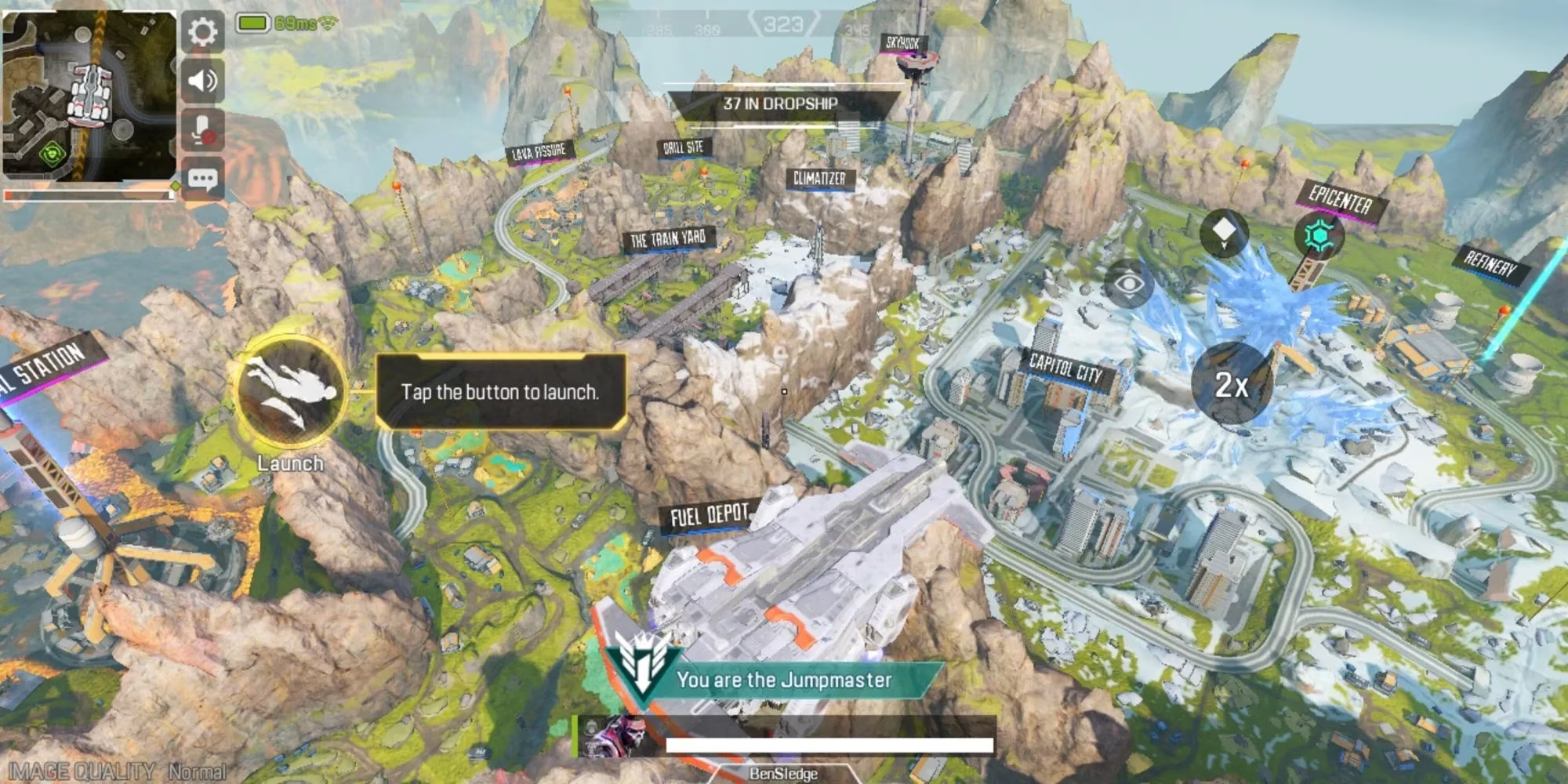
Strangely enough, at the very same time that Switch owners were suffering, Apex Legends Mobile was running like a dream on phones with Tensor chips and other modern processors. The mobile version hadn’t simply been ported; it was built from the ground up to respect weaker hardware. Textures were less complex, visual sound cues compensated for tinny speakers, and point-of-interest names popped out from the dropship in a way that was tailor-made for smaller screens. It was a brilliant adaptation that felt fluid even on mid-range devices. The tragedy is that while a Google Pixel 6 Pro could comfortably outrun the Switch’s aging Tegra X1—offering nearly four times the TeraFLOPS in FP32 computations—the mobile app never made the leap to Nintendo’s console. What stopped Respawn? The absence of controller support was the most obvious obstacle. The Switch’s touchscreen couldn’t match the responsiveness of a dedicated gamepad, and the mobile version was designed for fingertip controls. But once controller compatibility eventually arrived on phones, the window of opportunity seemed wide open. Except nobody walked through it.
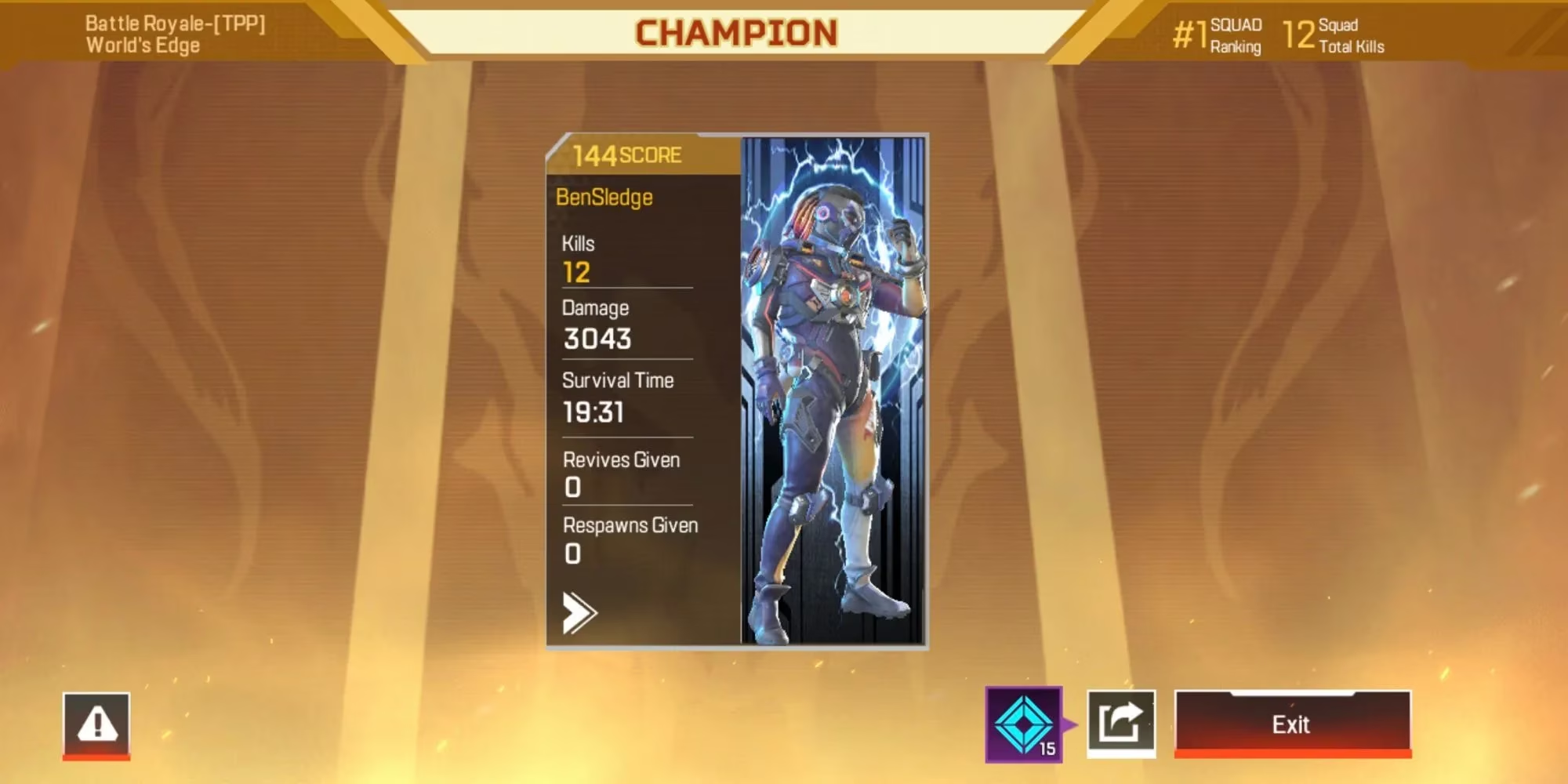
Imagine, for a moment, if Respawn had simply ported Apex Legends Mobile to the eShop. Switch players would have traded fuzzy character models for crisp, stylized assets. The cluttered menus from the PC and console editions could have been replaced by the mobile version’s simpler layout, which was far easier to navigate on a small display. Even the monetization, as problematic as it remained, wouldn’t have felt worse than what Nintendo users already dealt with. The mobile app cleverly sidestepped frame-rate disasters by not even attempting to render the same high-detail environments. A final circle packed with multiple Gibraltars and Caustics, which once turned the Switch into a stuttering mess, might have actually been playable. Would this have been a downgrade in visual fidelity? Absolutely. But when the alternative is a choppy mess that leaves players feeling robbed, most people would take the smoother option.
The industry has moved forward since then. Apex Legends Mobile shut down in 2023, leaving behind a trail of what-ifs. The Switch 2 launched with improved specs, yet its version of Apex remains a scaled-back port of the original codebase rather than a purpose-built experience. As of 2026, crossplay still throws Switch 2 users into the same lobbies as PlayStation and Xbox warriors, and the hardware discrepancy continues to feel unfair. One-clipping an opponent before they can react isn’t exactly fun for the person on the receiving end. The current state of affairs leaves a bitter taste. Could a reimagined mobile fork have solved this? The logic says yes. The adaptive POI labels, the visual sound rings, the modest texture work—all these would have given the processor a welcome break and allowed the game to flow more naturally.
.jpg)
It’s not that the concept was outlandish. Other titles have successfully bridged the mobile-console gap. Yet the moment passed, and download sizes have only ballooned since. Asking Switch 2 owners to download a separate client today would probably cause more confusion than relief. Still, one can’t help but reflect on the missed signal. If Respawn had treated the Switch not as a cut-down console but as a powerful mobile device—which, in terms of horsepower, it practically was—the entire narrative could have been different. Players would have jumped at a fresh way to experience Apex Legends without the performance anxiety. Newcomers might have been coaxed into trying the game on a platform they actually enjoyed holding. Instead, the existing version remains a curiosity, something to test once and then delete.
Perhaps the lesson will stick for future battle royale adaptations. When developers encounter hardware that struggles, the answer isn’t always to lower a few sliders. Sometimes it’s wiser to start fresh with a version that knows exactly what it’s running on. The mobile team understood that philosophy, and their creation proved it. For now, Switch players—even those on the latest hardware—will keep hoping that one day they won’t have to squint at a fuzzy landscape while others enjoy buttery-smooth 120fps action. Until then, the memory of what could have been will linger every time a new season drops.