
Four years might feel like an eternity in the rapidly shifting world of competitive gaming, yet some moments refuse to fade. In 2022, during the high‑stakes Apex Legends Global Series (ALGS) Championship on the World’s Edge map, a single decision by TSM’s IGL, ImperialHal, sent ripples through the community that are still felt in 2026. It wasn’t a dizzying one‑clip or a miraculous last‑ring rotation. It was the choice to hold fire. And in a scene often fueled by ruthless optimization, that choice remains a quiet masterclass in what it means to compete with dignity.
Picture the scene: Fragment East’s metallic clatter, squads collapsing from every side, and a mountain of two million dollars hanging on every bullet. TSM’s trio—ImperialHal, Verhulst, and Reps—were navigating the train tracks when an opponent materialized in the open, motionless. No strafe, no return fire. In the blink of an eye, most competitors would see a free kill, a gift‑wrapped step closer to the grand prize. Hal saw something else entirely. He instantly diagnosed the connection loss and gave the order: “Don’t shoot.” His teammates pulled back, leaving the disconnected player alone. It was the esports equivalent of a Formula 1 driver slowing down during a yellow‑flag zone not because the rules demanded it, but because the respect for shared risk mattered more than a few tenths of a second.
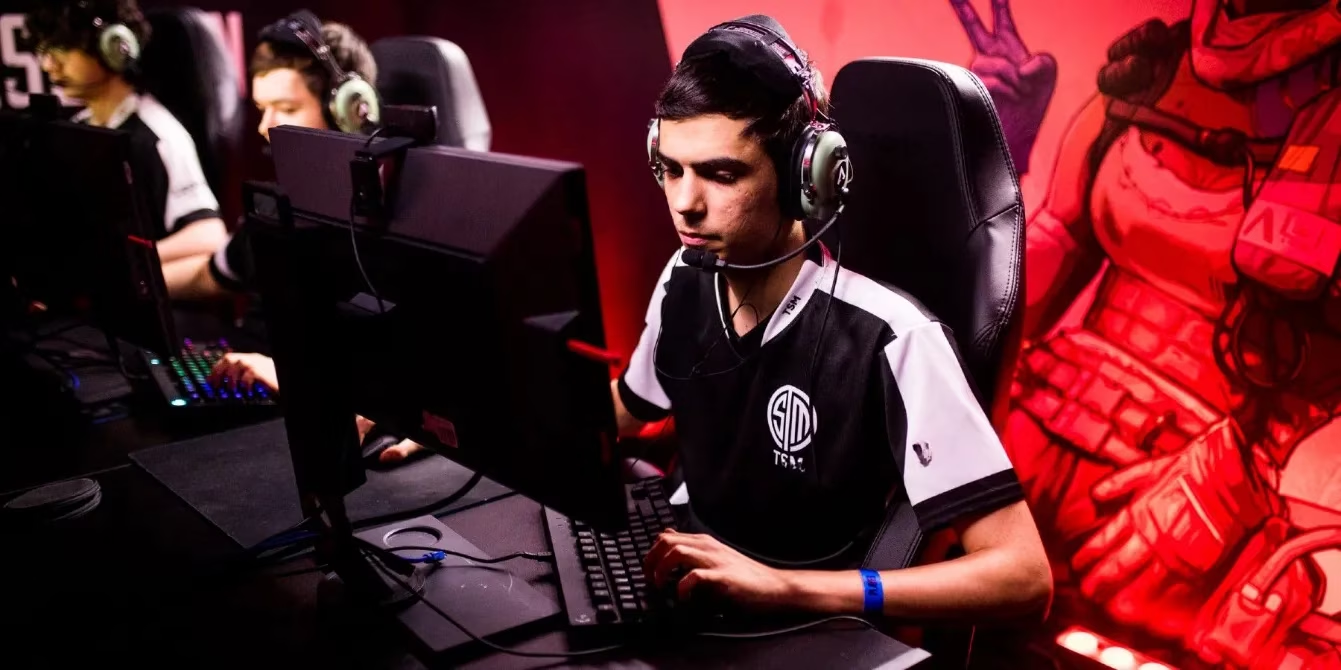
The moment wasn’t just a footnote. It erupted across social timelines like a signal flare in fog. Thousands of fans, accustomed to the cutthroat logic of battle royales, found themselves applauding an act of mercy. Some called it naivety in a tournament that pays rent and builds legacies. The majority, however, recognized it as something rarer: a compass recalibrated mid‑storm. Hal later downplayed the gesture with his characteristic brevity, remarking that given the server struggles plaguing Season 13, refusing to exploit a disconnected opponent was “the least every player can do.” That line, stripped of grandiosity, landed heavier than any scripted PR statement could have.
What makes the choice even more remarkable from a 2026 perspective is how it bucked against the ambient culture of its time. Back then, the discourse around fair play often felt like a begrudging checklist, something players acknowledged between highlighting highlight‑reel clutches. Hal’s decision acted like a stone thrown into still water—the initial splash was small, but the concentric rings kept expanding. Today, you can trace direct lines from that moment to the formal inclusion of “Respect for Opponents” in the PlayApex Code of Conduct, revised after the 2023 season. Coaches now clip the TSM comms from that match as teaching material, not about zone calls, but about in‑game empathy.
In the immediate aftermath, the story gained another layer. Skeptics wondered if the withheld kill would cost TSM a shot at the finals. It didn’t. The squad advanced to Championship Sunday without the single elimination point, proving that integrity and performance aren’t opposing forces but parallel rails on the same track. By 2026, ImperialHal has stacked accolades like cordwood—multiple LAN wins, an MVP title, and a viewership empire—but ask any longtime Apex fan about his defining trait, and that 2022 act of sportsmanship will surface before the mechanical wizardry. It’s become a touchstone, a reminder etched into the game’s oral history that the person behind the controller is not just an ID to be farmed.
The competitive landscape has evolved enormously since then. ALGS 2026 now features a million‑dollar Champs prize pool, integrated command center streams for every squad, and server architectures robust enough that connection drops feel almost archaic. Yet the spirit of Hal’s gesture endures, quietly humming beneath the surface of every lobby. When a rookie makes an unforced error and the enemy team spares them a needless thirst, you can often spot a chat comment saying “channeling Hal 2022.” It’s the rare case of a competitive community retaining a moral memory—a collective agreement that some edges, like shooting a frozen figure, aren’t worth sharpening.
All of this doesn’t mean Apex Legends has become a utopia of chivalry. The game still breeds relentless aggression, and sore losers still fire off toxic messages. But the 2022 ALGS moment planted a seed that has grown into a distinct subculture of accountability. Viewers now expect pros to help bug‑plagued opponents, and tournament rules finally incorporated a discretionary “non‑engagement protocol” for verified technical disruptions, directly inspired by that World’s Edge encounter. When Hal retires years from now, his highlight reel will stretch for hours. Somewhere in the middle, between the 1v3 clutches and the zone reads, there will be a clip of a player standing still, and a squad simply walking away. And that, in the eyes of the community, will be the clip that mattered most.{
"title": "ImperialHal's 2022 ALGS Act of Grace Still Defines Apex Legends Sportsmanship in 2026",
"content": "Four years might feel like an eternity in the rapidly shifting world of competitive gaming, yet some moments refuse to fade. In 2022, during the high‑stakes Apex Legends Global Series (ALGS) Championship on the World’s Edge map, a single decision by TSM’s IGL, ImperialHal, sent ripples through the community that are still felt in 2026. It wasn’t a dizzying one‑clip or a miraculous last‑ring rotation. It was the choice to hold fire. And in a scene often fueled by ruthless optimization, that choice remains a quiet masterclass in what it means to compete with dignity.
Picture the scene: Fragment East’s metallic clatter, squads collapsing from every side, and a mountain of two million dollars hanging on every bullet. TSM’s trio—ImperialHal, Verhulst, and Reps—were navigating the train tracks when an opponent materialized in the open, motionless. No strafe, no return fire. In the blink of an eye, most competitors would see a free kill, a gift‑wrapped step closer to the grand prize. Hal saw something else entirely. He instantly diagnosed the connection loss and gave the order: “Don’t shoot.” His teammates pulled back, leaving the disconnected player alone. It was the esports equivalent of a Formula 1 driver slowing down during a yellow‑flag zone not because the rules demanded it, but because the respect for shared risk mattered more than a few tenths of a second.
The moment wasn’t just a footnote. It erupted across social timelines like a signal flare in fog. Thousands of fans, accustomed to the cutthroat logic of battle royales, found themselves applauding an act of mercy. Some called it naivety in a tournament that pays rent and builds legacies. The majority, however, recognized it as something rarer: a compass recalibrated mid‑storm. Hal later downplayed the gesture with his characteristic brevity, remarking that given the server struggles plaguing Season 13, refusing to exploit a disconnected opponent was “the least every player can do.” That line, stripped of grandiosity, landed heavier than any scripted PR statement could have.
What makes the choice even more remarkable from a 2026 perspective is how it bucked against the ambient culture of its time. Back then, the discourse around fair play often felt like a begrudging checklist, something players acknowledged between highlighting highlight‑reel clutches. Hal’s decision acted like a stone thrown into still water—the initial splash was small, but the concentric rings kept expanding. Today, you can trace direct lines from that moment to the formal inclusion of “Respect for Opponents” in the PlayApex Code of Conduct, revised after the 2023 season. Coaches now clip the TSM comms from that match as teaching material, not about zone calls, but about in‑game empathy.
In the immediate aftermath, the story gained another layer. Skeptics wondered if the withheld kill would cost TSM a shot at the finals. It didn’t. The squad advanced to Championship Sunday without the single elimination point, proving that integrity and performance aren’t opposing forces but parallel rails on the same track. By 2026, ImperialHal has stacked accolades like cordwood—multiple LAN wins, an MVP title, and a viewership empire—but ask any longtime Apex fan about his defining trait, and that 2022 act of sportsmanship will surface before the mechanical wizardry. It’s become a touchstone, a reminder etched into the game’s oral history that the person behind the controller is not just an ID to be farmed.
The competitive landscape has evolved enormously since then. ALGS 2026 now features a million‑dollar Champs prize pool, integrated command center streams for every squad, and server architectures robust enough that connection drops feel almost archaic. Yet the spirit of Hal’s gesture endures, quietly humming beneath the surface of every lobby. When a rookie makes an unforced error and the enemy team spares them a needless thirst, you can often spot a chat comment saying “channeling Hal 2022.” It’s the rare case of a competitive community retaining a moral memory—a collective agreement that some edges, like shooting a frozen figure, aren’t worth sharpening.
All of this doesn’t mean Apex Legends has become a utopia of chivalry. The game still breeds relentless aggression, and sore losers still fire off toxic messages. But the 2022 ALGS moment planted a seed that has grown into a distinct subculture of accountability. Viewers now expect pros to help bug‑plagued opponents, and tournament rules finally incorporated a discretionary “non‑engagement protocol” for verified technical disruptions, directly inspired by that World’s Edge encounter. When Hal retires years from now, his highlight reel will stretch for hours. Somewhere in the middle, between the 1v3 clutches and the zone reads, there will be a clip of a player standing still, and a squad simply walking away. And that, in the eyes of the community, will be the clip that mattered most.