
I can't even begin to describe the absolute seismic shift I've witnessed in video games since I first picked up a controller! What was once a landscape dominated by cookie-cutter heroes has exploded into a vibrant, kaleidoscopic universe where stories aren't just told—they're lived, breathed, and fought for with every button press. The sheer, unadulterated power of stepping into someone else's shoes, of seeing the world through a lens you never knew existed... it's nothing short of revolutionary! And let me tell you, as we stand here in 2026, the journey of trans representation in gaming has gone from a whispered secret to a triumphant, stadium-filling roar. These aren't just 'characters' anymore; they're beacons, guides, and friends who have fundamentally reshaped how I understand courage, identity, and the very soul of interactive storytelling.
9. Borderlands 3: Anarchy Gets a Heart
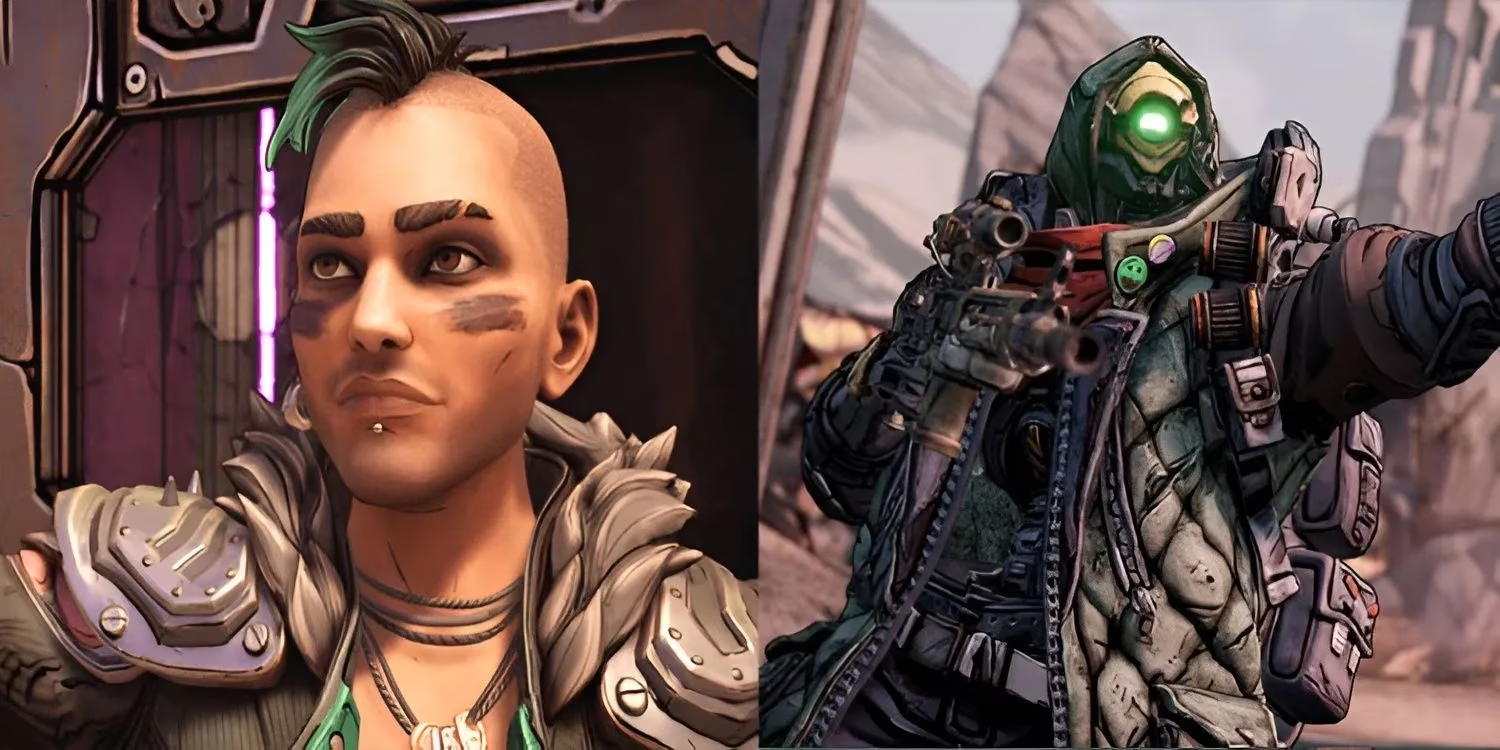
Holy. Cow. When I first booted up Borderlands 3, I was expecting the usual chaotic mayhem—explosions, ridiculous guns, and psychos screaming about meat bicycles. What I wasn't expecting was to have my heart utterly stolen by a non-binary robot on a quest for self-discovery! FL4K isn't just some side character; they're a Vault Hunter, a playable powerhouse conceived by a non-binary developer. The genius is in the details! I remember staring at their design, seeing that badge with the computer binary symbol crossed out—a silent, powerful statement woven right into the armor. And then there's Lor... oh, Lor. Their story of closeted dysphoria hit me like a freight train. But the real kicker? The sequel, Tales from the Borderlands, didn't just leave them there. It showed the payoff! It introduced a new trans guy to the series, proving that these stories have longevity, growth, and a permanent place in the universe. This isn't tokenism; it's narrative evolution, and it's spectacular!
8. Celeste: A Mountain of Metaphor and My Own Tears
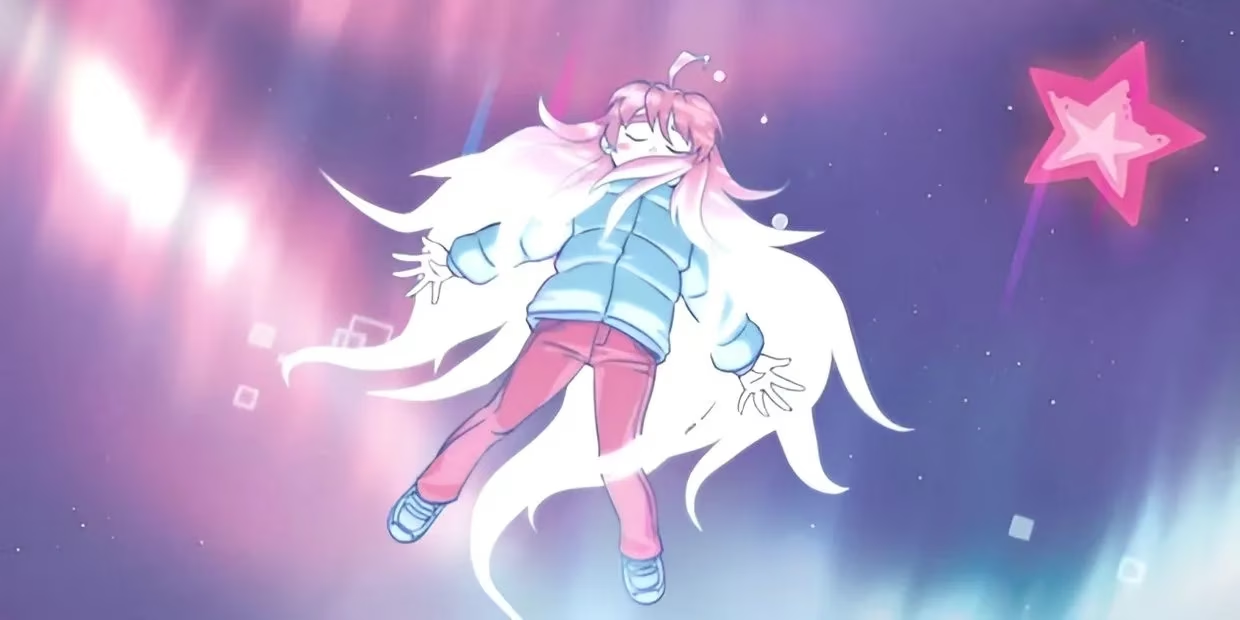
If you told me a game about climbing a mountain would become one of the most profound trans allegories in history, I'd have called you crazy. But Celeste... oh, Celeste. I played this masterpiece back in 2018, and I felt Madeline's anxiety, her drive, her fear of failure in my very bones. Every treacherous platform, every frantic dash, mirrored the internal climb. The genius of it all? The trans confirmation wasn't screamed from the mountaintop. It was whispered in the quietest, most powerful way possible in the Farewell DLC. Finding that bottle of pills, seeing the old photo, spotting the trans flag in the final moments—it was a revelation that explained everything. The journey wasn't just about climbing a physical mountain; it was about Madeline's journey to herself, a journey that director Maddy Thorson was also on. The ludonarrative harmony is perfect: the struggle of the climb IS the struggle of self-acceptance. This game didn't just tell a story; it made me feel one.
7. Tell Me Why: A Groundbreaking First Step
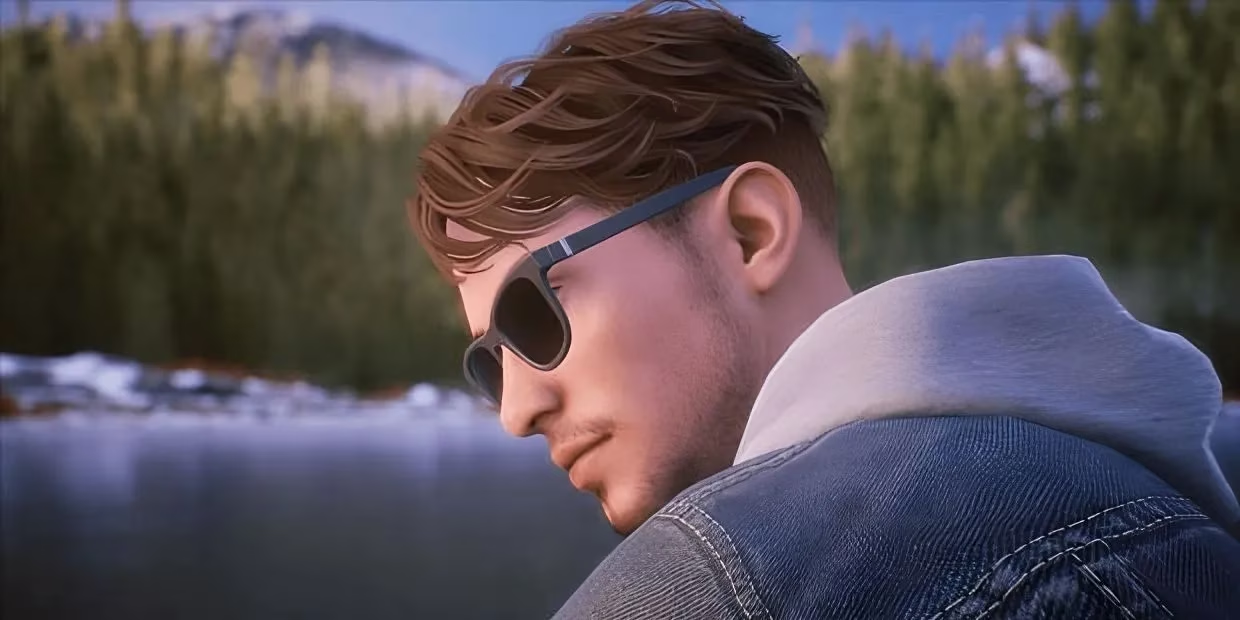
When Tell Me Why launched, it felt like history in the making. The first big-budget game with an openly trans protagonist, Tyler? I was glued to my screen. This wasn't a fantastical allegory; this was a nuanced, grounded look at daily life. Watching Tyler go through his routine—using his binder, taking testosterone—was quietly educational in a way no documentary could be. It normalized the experience. The consultants from GLAAD and the trans voice actors ensured authenticity rang through every line. What struck me most was that Tyler's story wasn't defined by constant trauma or a battle for basic respect. He was a fully realized person dealing with family mysteries and sibling bonds, with his trans identity being a core part of him, not his sole conflict. It set a new standard for respectful, holistic representation.
6. Guilty Gear Strive: The Return of an Icon
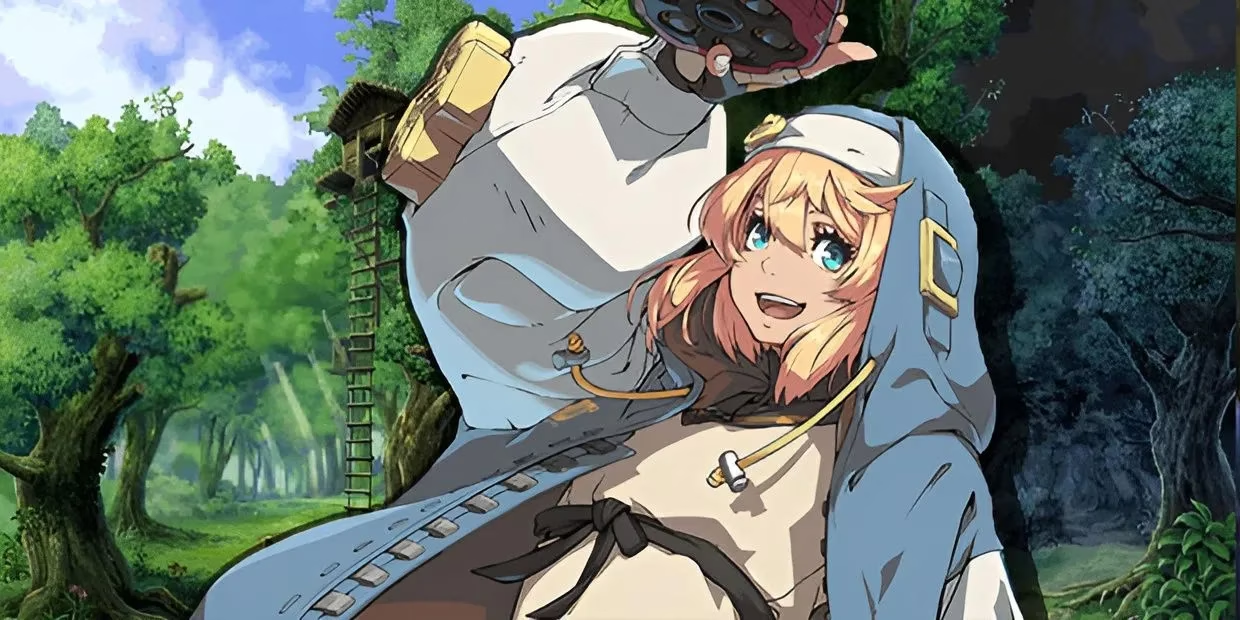
Fighting games have always had a... complicated history with gender presentation. So when Guilty Gear Strive brought back Bridget after 20 years, I held my breath. Her original portrayal was a product of its time—the cross-dressing trope. But Arc System Works did something beautiful. They didn't ignore her past; they built on it. Bridget's 2022 story is a heartfelt exploration of self-identity. With the help of friends, she works through those deeply ingrained expectations from her village and her past. Watching this fan-favorite character finally embrace who she is, in the middle of all the over-the-top anime combat, was surprisingly sweet and powerful. She didn't just return as a fighter; she returned as a trans icon, and the community's embrace was a thing of beauty.
5. Monster Prom Series: Exploring Identity with Monsters
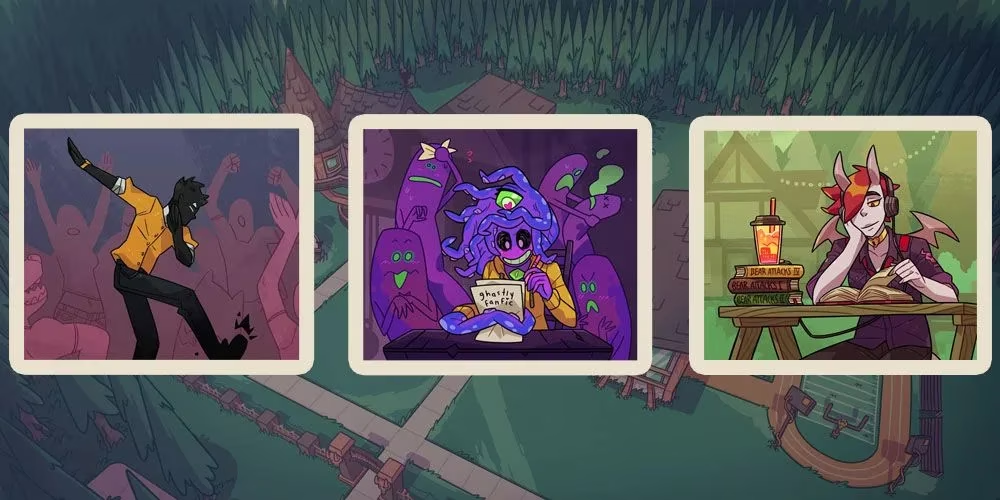
Who knew that the most relatable stories about gender exploration in 2026 would come from a game about dating monsters in high school? The Monster Prom series is an absolute gem! Over three games, it introduces us to multiple trans and non-binary characters, each with their own unique flavor:
-
Oz (masc-leaning, uses multiple pronouns): The calming, supportive friend who helps others with their insecurities. A rock.
-
Sawyer: More isolated but fiercely self-motivated and caring. Their confidence is aspirational!
-
Zoe: She goes on a full arc! From self-discovery to overcoming the literal personification of her insecurities (a basement-dwelling kappa, no less!), her journey to becoming a trans protagonist is hilarious, touching, and deeply empowering.
This series gets it. It wraps these profound journeys of identity in a package of absurd humor and teenage drama, making them accessible and deeply human (or, well, monster).
4. Apex Legends: Legends of All Kinds
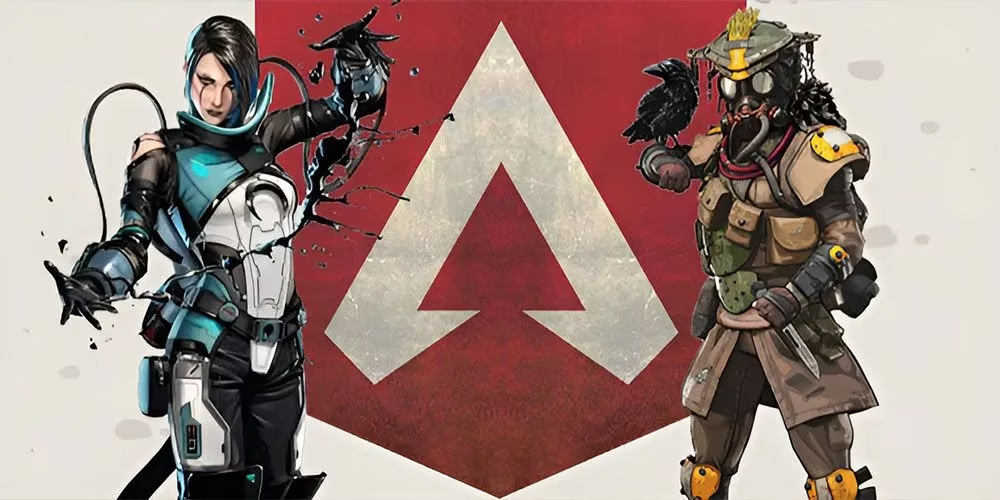
In the hyper-competitive arena of battle royale, Apex Legends taught me that representation isn't just for story-driven games. When Bloodhound was introduced, their non-binary identity was woven seamlessly into a tragic, compelling backstory about breaking free from traditional expectations. That moment of validation from their father? Chills. But then in Season 15, Respawn dropped Catalyst—a trans woman designed from the ground up with pride. And here's the brilliant part: her story isn't about transitioning. It's about her being a headstrong, rebellious terraformer rising from the ashes of war. Her identity is a fact, not a footnote, allowing her to be a complete, powerful character first and foremost. In a game where every second counts, these legends remind millions of players that identity is a strength, not a sidebar.
3. 2064: Read Only Memories: A Whole World of Acceptance
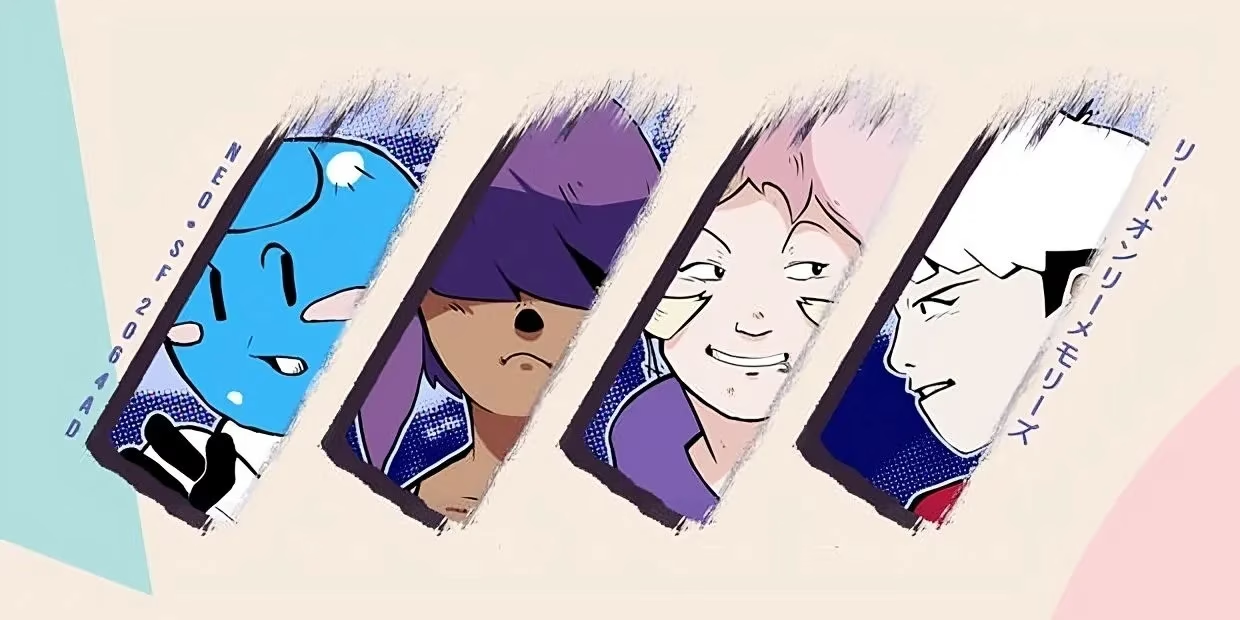
Most games are thrilled to have one well-written trans character. 2064: Read Only Memories said, "Why stop there?" and built an entire futuristic society where trans-humanism and gender exploration are normalized. Playing this point-and-click adventure in Neo-San Francisco feels like taking a breath of fresh air. The city itself feels safe and comfortable for its diverse residents. You have multiple trans and non-binary characters, including a charming robot who became a queer conference mascot! And the cherry on top? The game lets you, the player, input custom pronouns. It's a small feature with massive impact, making the world feel genuinely inclusive. This game proves that representation isn't just about individual characters; it's about building worlds where those characters can truly belong.
2. Undertale: Defying Convention at Every Turn
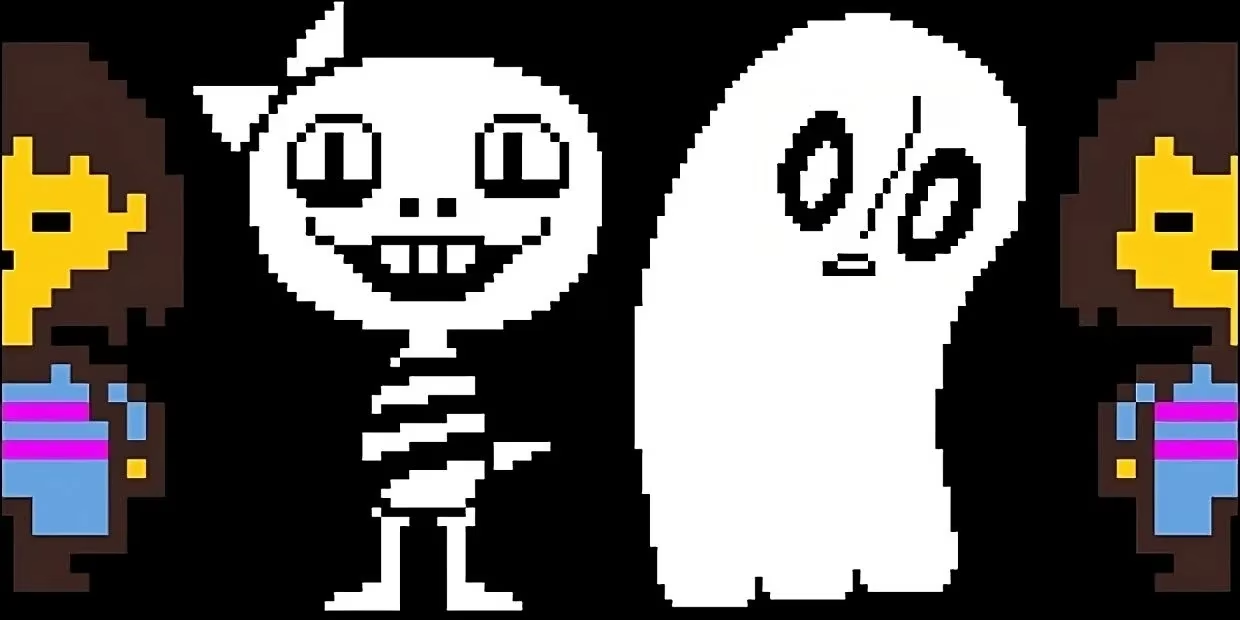
Of course Undertale would be on this list. Toby Fox's masterpiece is built on subverting expectations, and its approach to identity is no different. The player character, Frisk, is a beautiful non-binary blank slate, allowing anyone to project themselves into the journey. But it doesn't stop there! The world is populated with wonderful non-binary characters:
-
Napstablook: The melancholic yet chill ghost who hosts a psychedelic music session. Pure vibes.
-
Monster Kid: All heart and enthusiasm, a clumsy fan who sees the best in everyone.
-
Mad Mew Mew: The Switch-exclusive transformation of Mad Dummy, who finally finds their "perfect body."
In Undertale, different identities aren't a plot point; they're just a natural, celebrated part of the world's delightful weirdness. It's representation through effortless inclusion.
1. Paper Mario: The Thousand-Year Door: A Ghost Girl's Triumph
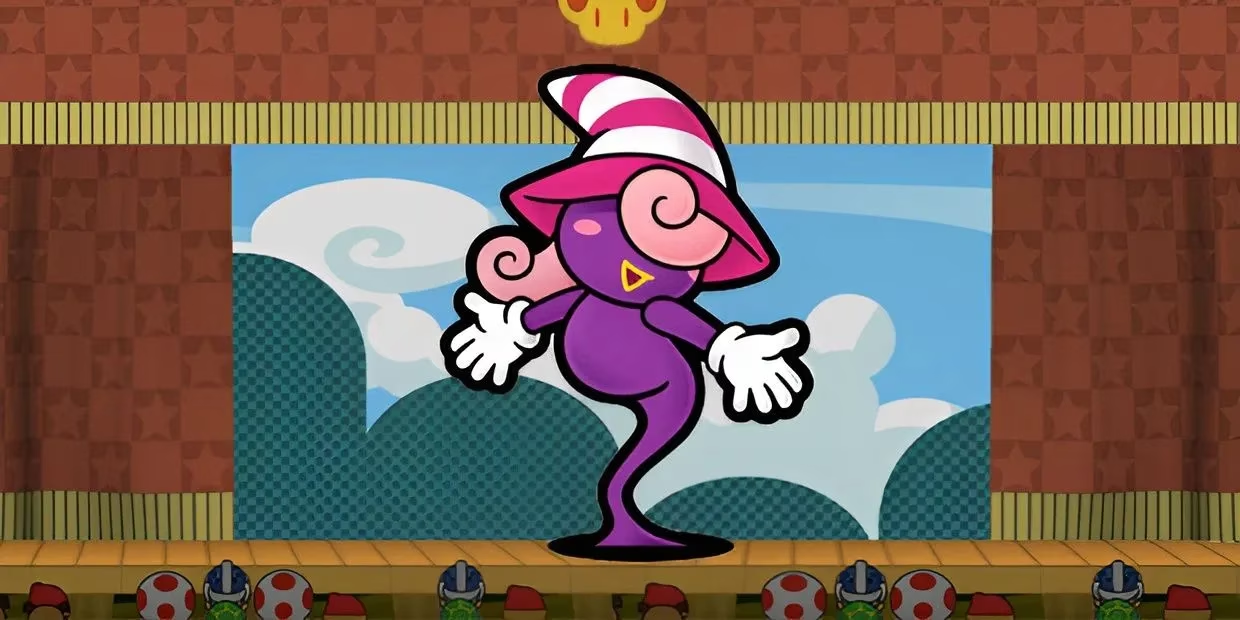
And now, the one that often gets overlooked but deserves a standing ovation: Vivian from Paper Mario: The Thousand-Year Door. Her story is a fascinating, complex case study in global storytelling. This sweet ghost girl endures relentless transphobia from her two cruel sisters, Beldam and Marilyn. But here's the wild part: her triumphant arc of self-acceptance was presented differently depending on where in the world you played!
| Region | Portrayal of Vivian's Story | Impact |
|---|---|---|
| Japan & European English | Full, heartfelt story of overcoming peer rejection. | Shows her journey to happiness and comfort. |
| Italy | Uses themes of pride to dispel her sisters' arguments. | A more empowered, direct confrontation. |
| North America (Original) | All references to her being trans were cut. | A muted, less impactful version of her arc. |
Playing the original North American version as a kid, I sensed something was missing from Vivian's story—a depth to her sadness that wasn't fully explained. Discovering the true, uncut version years later was a revelation. It transformed her from a shy party member into a resilient icon who stands up to her bullies and finds her family with Mario and friends. Her inclusion, even in its censored form, was a quiet landmark for Eastern-developed games, proving that these stories can and do resonate across all cultures.
Looking back from 2026, this isn't just a list of games. This is a chronicle of a revolution. We've journeyed from subtext and allegory to explicit, proud, and nuanced storytelling. We've moved from single characters to entire communities. These games taught me more about empathy, diversity, and the human experience than any other medium ever could. They didn't just entertain me; they changed my perspective, challenged my assumptions, and expanded my world. And the best part? This is only the beginning. The climb up Celeste Mountain continues, and I, for one, can't wait to see the view from the next peak. 🎮🏳️⚧️✨