
In the fast-paced world of hero shooters, two giants stand out for their distinct approaches: Respawn Entertainment's Apex Legends and Blizzard's Overwatch 2. While both games are celebrated for their vibrant rosters and unique abilities, their core design philosophies diverge significantly, creating vastly different player experiences. As of 2026, this contrast remains a central topic for players and analysts dissecting the genre's evolution. One game champions the purity of gunplay, where abilities serve as tactical enhancers, while the other leans heavily into a complex symphony of cooldowns and ultimate combos, creating a gameplay loop that feels more akin to a Multiplayer Online Battle Arena (MOBA) than a traditional First Person Shooter (FPS).
The Gunplay-First Ethos of Apex Legends
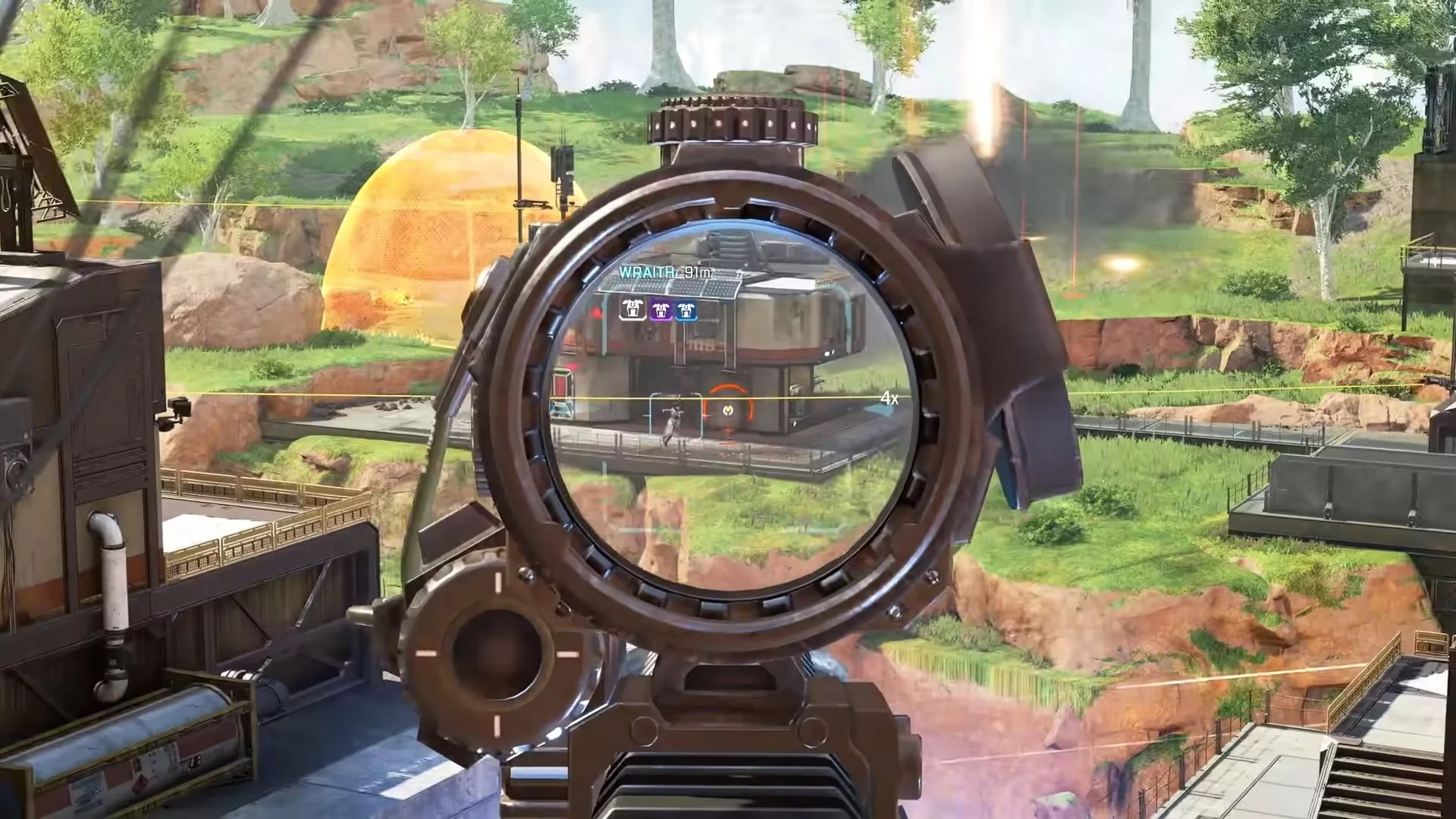
At its heart, Apex Legends is a shooter's shooter. The game's bread and butter is its tight, rewarding gunplay. Legend abilities, by design, are meant to create openings and facilitate positioning rather than serving as the primary means of securing eliminations. Think of them as the supporting cast to your trusty R-301 Carbine or Peacekeeper.
-
Tactical Repositioning: Abilities like Wraith's "Into the Void" or Pathfinder's Grappling Hook are quintessential tools for outmaneuvering opponents and seizing the high ground. They don't kill enemies directly but set you up for the perfect shot.
-
Exceptions to the Rule: Of course, there are outliers like Rampart's mounted minigun, "Sheila," which packs a direct punch. However, even these powerful tools often require solid positioning and gunplay fundamentals to maximize their effectiveness.
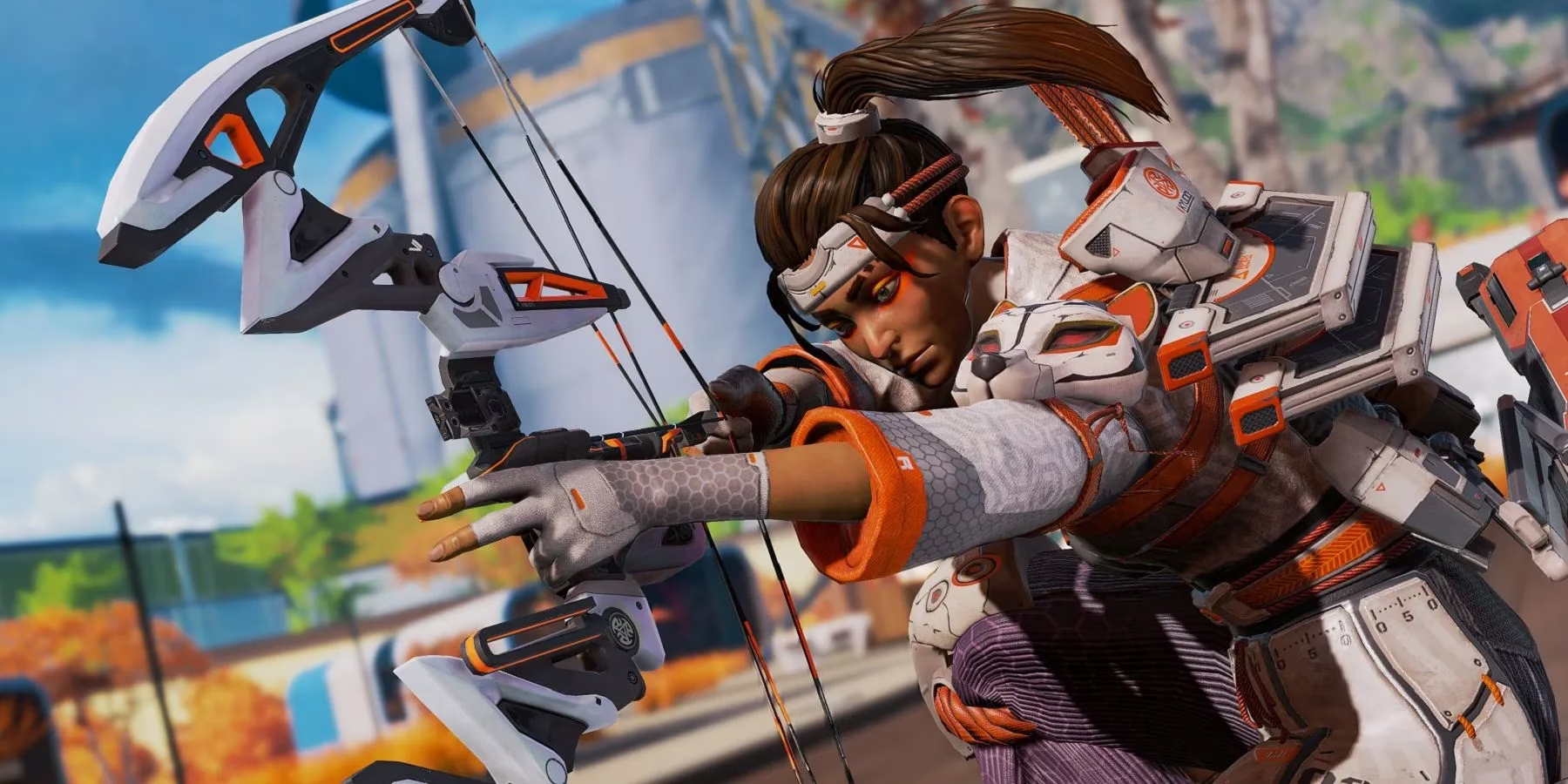
The game's structure enforces this. With up to 60 players in a match, each legend is designed with a lean kit: one passive, one tactical, and one ultimate ability. This "economy of abilities" is a masterstroke in clarity. It prevents the gameplay from devolving into a visually noisy ability spam fest, allowing players to focus on the core FPS skills of aim, movement, and map awareness. Even when facing a full squad of different legends, keeping track of their limited toolkits is manageable. As the community says, it's about 'shooting your shot' first and using your abilities to 'secure the bag' (the win).
Overwatch 2: The Symphony of Cooldowns
In stark contrast, Overwatch 2 is a game defined by its abilities. While every hero has a weapon, they often feel like tools for building ultimate charge or applying pressure rather than the main event. The real drama unfolds through a complex dance of cooldowns, counters, and team synergy.
-
Ability-Centric Kills: Heroes like Genji exemplify this design. His shurikens soften up targets, but the 'clutch play' is often securing a kill with Swift Strike, which resets on elimination, allowing for rapid, ability-driven team wipes.
-
Team Composition is Key: Success hinges on understanding not just your hero's kit, but those of your four teammates and the five enemies. It's a game of rock-paper-scissors at a strategic level, where picking the right counter can completely shut down the enemy's strategy.
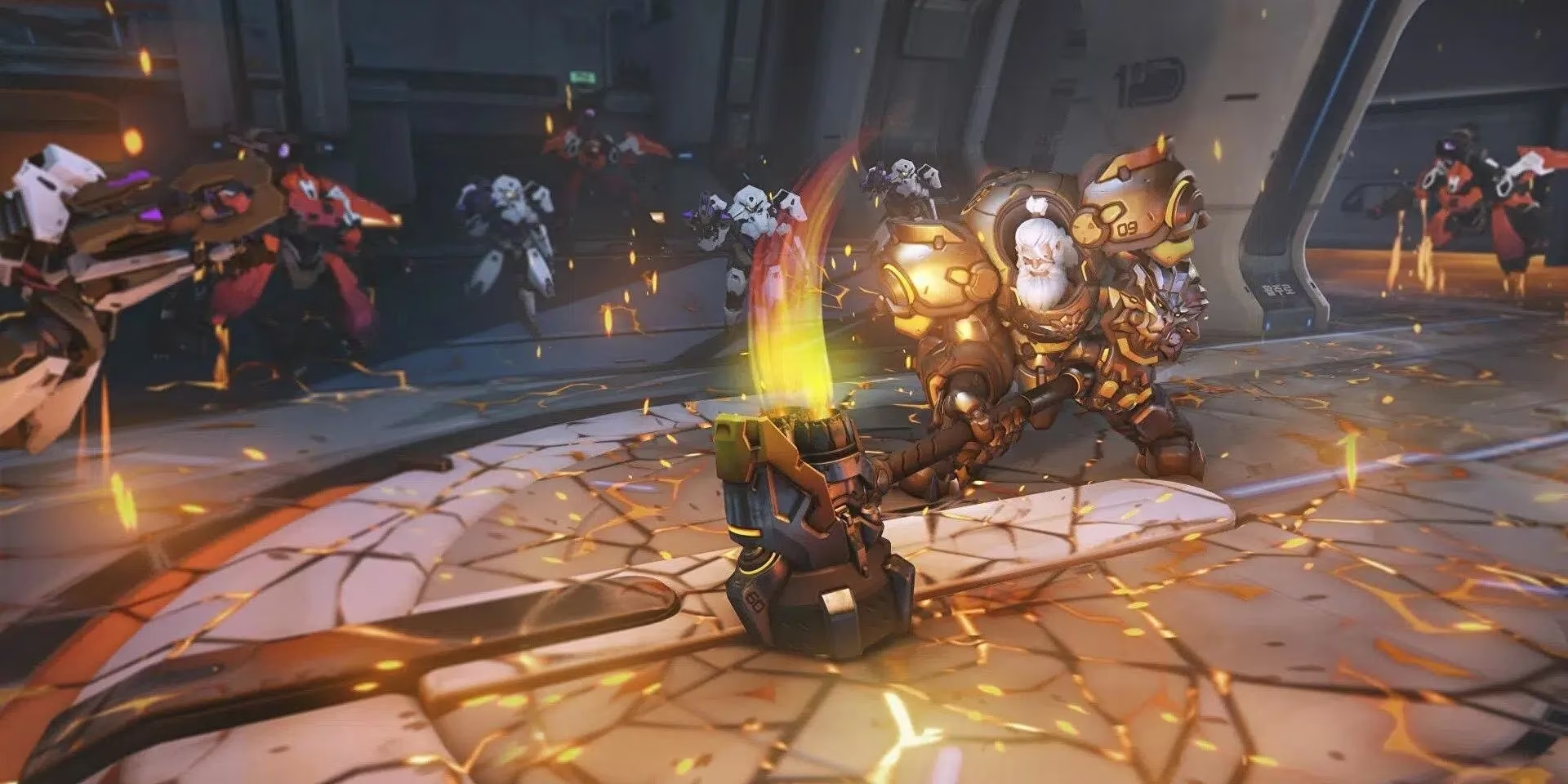
This depth creates 'hype' moments that are unforgettable—a perfectly timed Graviton Surge combined with a Dragonstrike. However, it also creates a significant barrier to entry. Ten heroes, each with multiple unique abilities, unleashing hell in a confined space can be pure 'sensory overload'. It's no wonder Blizzard reduced team sizes from six to five to mitigate the visual and strategic chaos. For a new player, it can feel less like an FPS and more like trying to learn a new language mid-conversation.
The Accessibility Conundrum and a Potential Path Forward
As Overwatch 2 continues to expand its roster, the problem of ability saturation looms. Not every new player has the time or dedication to learn the intricacies of dozens of heroes. This is where Apex Legends' design philosophy offers a compelling lesson for Blizzard.
| Aspect | Apex Legends | Overwatch 2 |
|---|---|---|
| Primary Win Condition | Gunplay & Positioning | Ability Usage & Team Synergy |
| Ability Role | Tactical Enhancer / Opener | Core Gameplay Driver |
| Kit Complexity | Low (3 abilities/legend) | High (Varies per hero) |
| New Player Onboarding | Easier to grasp core loop | Steeper learning curve |
| Gameplay Feel | Traditional FPS with perks | MOBA-style FPS |
While Apex is not immune to balance challenges with its growing cast, a skilled player can often overcome a powerful ability with superior aim and positioning—a classic FPS tenet. In Overwatch 2, ignorance of an enemy hero's kit can feel like an insurmountable disadvantage.
Looking ahead, for Overwatch 2 to truly lower its barrier to entry without sacrificing its identity, it might consider a hybrid approach. Future heroes could be designed with more streamlined kits, focusing on impact and clarity. The goal wouldn't be to abandon its ability-driven soul but to 'meet players halfway', ensuring the game remains approachable for the next generation of players. After all, in 2026's crowded gaming landscape, a game needs to be both deep and welcoming to stay on top. The evolution of this design tug-of-war will be one of the most interesting stories to watch in the coming years. 😎🎮
Overwatch 2 remains free-to-play across all major platforms.