
In 2026, with Apex Legends celebrating over seven years of continuous evolution, it is easy to overlook the early-season patches that quietly shaped the game’s competitive integrity. One such moment arrived in late May 2022, when Respawn Entertainment deployed a targeted update for Season 13 – a fix that would become a touchstone for how the live-service team handles game-breaking Legend interactions. Today, we look back at that pivotal patch and its lasting impact on the Outlands.
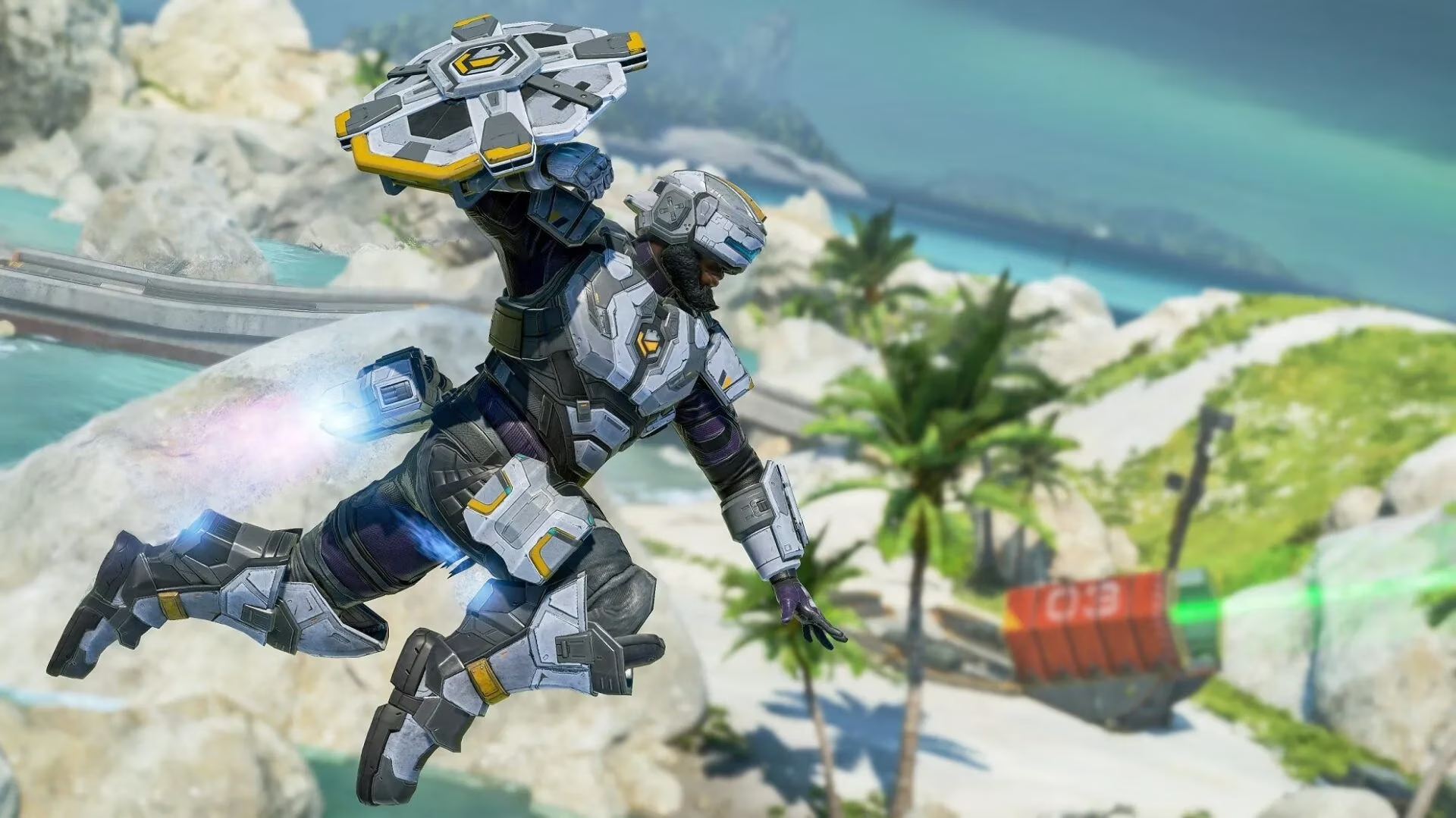
Season 13, known as Saviors, had only been live for a couple of weeks when the May 23 update dropped. The launch itself brought the fortified hero Newcastle, a mobile guardian capable of erecting a Castle Wall as his ultimate ability, along with sweeping map changes to Storm Point. While the new content generated excitement, a frustrating bug quickly surfaced: Newcastle’s ultimate turret or wall could unexpectedly stun Wraith while she was in the middle of her dimensional phase shift, rendering one of her core escape tools nearly useless. Even more troubling, the same interaction occurred with allies using Wraith’s portal, effectively disrupting tactical rotations across the map.
The fix, detailed in what was then version 1.96, resolved the stun lock against phasing players – a crucial adjustment that restored the balance of power between defensive and mobility-based Legends. Without it, the interplay of void manipulation and physical shields became a gamble rather than a test of skill. Community feedback at the time was swift, with pro players and casual squads alike reporting the bug on platforms like the Apex Legends Trello board and social media.
Yet the May 23 update didn’t stop at the Newcastle-Wraith interaction. The patch also laid the groundwork for resolving several other high-priority issues that had been flagged as “coming in future patch.” These included:
-
Audio anomalies: Strange echoes and muffled directional cues plagued many gamers, which could only be partially mitigated by forcing console audio to “Stereo Uncompressed.” The audio engine, victim of its own complexity, would later receive a substantial overhaul, but the awareness of this early problem pushed the devs to prioritize sound clarity – a legacy that benefits players even in 2026.
-
Predator ranked rewards: Players reaching the highest tiers were receiving incorrect seasonal rewards, a frustrating oversight that undermined the competitive grind. The Trello board acknowledgment signaled that proper compensation and rank-based cosmetics were on the horizon.
-
IMC Armory teleporter fault: Squads could occasionally become trapped inside the interactive Armory because the evacuation teleporter simply refused to activate. This turned a loot-rich environment into a death trap, and the upcoming fix restored the intended risk-reward balance.
-
Loba’s tactical failure: The high-society thief’s Burglar’s Best Friend bracelet frequently fizzled on Storm Point’s jagged cliffs and rocky surfaces. With the patch planned, players could once again confidently translocate across that volatile terrain without fearing a dead landing.
-
Assorted Newcastle bugs: Beyond the Wraith stun, the new Legend exhibited a handful of other inconsistencies – from Castle Wall placement glitches to unexpected vanishings of his mobile barriers. All were slated for resolution, underscoring Respawn’s commitment to polishing their newest champion.
These incremental fixes encapsulate what made Apex Legends a resilient live-service title. By quickly isolating and broadcasting intent to fix bugs, the development team built trust with a player base that often demanded near-perfect balance. The Newcastle-Wraith incident, in particular, highlighted the intricate dance between offensive mobility and defensive zoning – a design philosophy that continues to inspire new Legends and ability synergies in today’s meta.
Looking at the current landscape in 2026, many of those lessons endure. The current Legend roster, now expanded with experimental movement kits and temporal abilities, owes a quiet debt to patches like the one on that distant May 23. Back then, a wall couldn’t stop a phantom from slipping away; today, no ability interaction escapes the scrutiny of a seasoned QA process – but the spirit of rapid, transparent patching remains unchanged.
For those who were there at the time, the memory of a helpless Wraith frozen mid-phase by an unexpected Castle Wall still sparks conversations about the game’s most bizarre moments. It stands as a reminder that every season’s launch is merely the beginning of an ongoing conversation between developers and players, one hotfix at a time.