
I still remember the day in 2026 when I realized my entire digital library had become illegal overnight. As a gamer in Russia, I woke up to a dystopian reality where my beloved virtual worlds were now considered criminal contraband. The expansion of Russia's 'LGBT propaganda' law from protecting children to encompassing all adults has transformed my passion into a perilous activity. The vague, sweeping language of this legislation has created an atmosphere of constant fear—where even mentioning a character's sexuality in a game chat could land me with a fine that amounts to years of my salary. This isn't just about politics; it's about the systematic erasure of entire narratives and identities from our cultural landscape, enforced with financial threats that could bankrupt ordinary citizens like myself.
The Banned Games List: My Personal Digital Cemetery
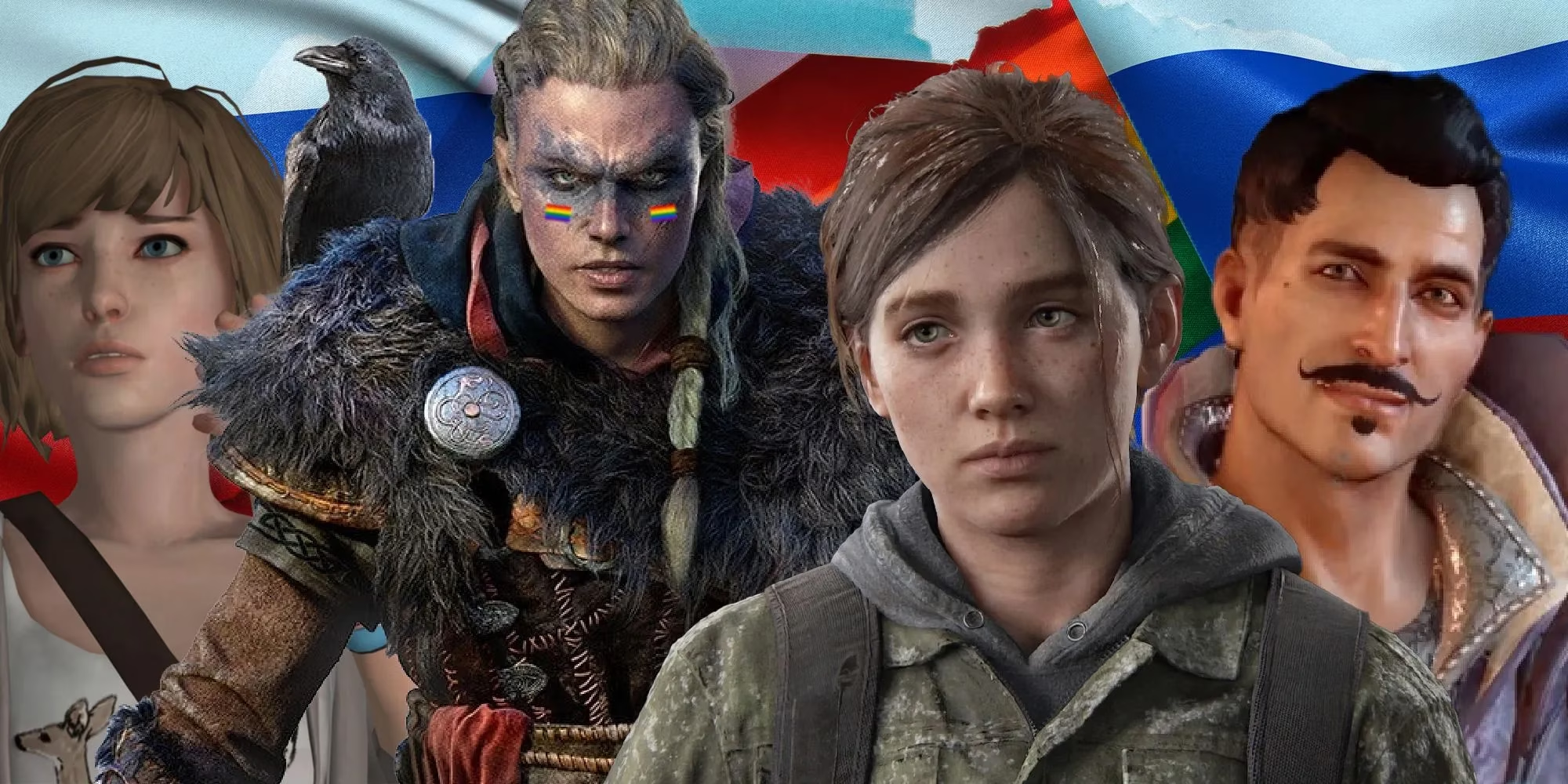
When politician Yana Lantratova released that infamous list back in November, I felt a physical sickness looking through it. These weren't just games—they were chapters of my life, friendships I'd formed through shared adventures, and stories that helped me understand human diversity. Let me show you what they took from us:
My Now-Illegal Collection:
| Game Series | Why It Matters | Personal Memory |
|---|---|---|
| Assassin's Creed | Historical LGBTQ+ representation | Exploring Renaissance Florence with Leonardo da Vinci's coded relationships |
| Dragon Age | Complex romance options | My first virtual same-sex relationship that felt genuinely meaningful |
| The Last of Us | Groundbreaking queer narratives | Crying during Bill and Frank's storyline in the TV adaptation |
| Life Is Strange | Teen LGBTQ+ experiences | Reliving my own confusing adolescence through Chloe and Max |
| The Sims | Freedom of expression | Creating my ideal world where love wasn't restricted |
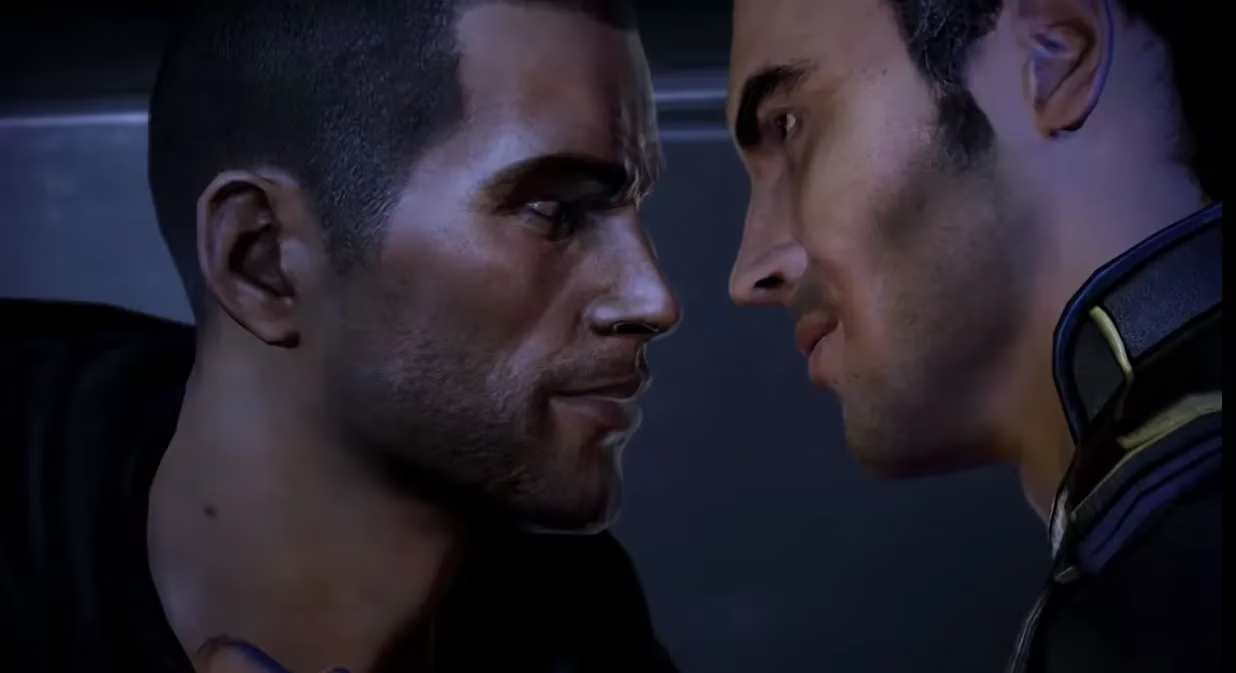
That image above? Just looking at it now makes my heart race with anxiety. In 2026, displaying this screenshot publicly could cost me 400,000 rubles—approximately what I earn in eight months. The sheer absurdity of it all! These fictional relationships between pixels on a screen are now considered more dangerous than actual corruption or violence in our society.
The Chilling Effect: How Self-Censorship Has Poisoned Gaming Culture
The worst part isn't the fines themselves—it's the psychological terror they've created. Our gaming communities, once vibrant spaces for discussion and discovery, have become ghost towns of paranoia. Here's what's changed in my daily gaming life:
🔴 Voice Chat Silence: No one discusses romance options anymore. That exciting moment when you discover a queer character? Now met with dead air.
🔴 Streamer Exodus: All my favorite Russian streamers have either left the country or stick to 'safe' games like chess simulators.
🔴 Modding Community Destruction: The brilliant modders who used to create inclusive content have vanished, fearing their work could be classified as 'propaganda.'
🔴 Digital Self-Harm: I've had to manually censor my own gaming videos, blurring out romantic scenes that might trigger the authorities.
Activists weren't exaggerating when they told the Moscow Times this law could mean a complete ban on any media showing LGBTQ+ people. In practice, that's exactly what's happened. Game developers now pre-censor their releases for the Russian market, removing even subtle references. Remember how Dragon Age: Inquisition had that beautiful same-sex wedding scene? The 2026 Russian version replaces it with a generic 'friendship ceremony.'
The Historical Context: From Crime to Invisibility
What many outside Russia don't understand is that this didn't happen in a vacuum. Homosexuality was literally a crime here until 1993—within my parents' lifetime. The 'hostile atmosphere' activists describe isn't metaphorical; it's the air we breathe. This new law feels like regression dressed as protection, pushing us back toward those darker times but with digital surveillance capabilities they could only dream of in the 90s.
Consider this progression:
-
1993: Decriminalization (but stigma remains)
-
2013: 'Protection of Children' law passed
-
2022: Law expanded to adults
-
2024-2026: Increasingly broad interpretations and enforcement
Each step has narrowed the space for existence until, in 2026, we've reached the point where a game character's sexual orientation is treated as a national security threat.
The Economic Absurdity: Fines That Defy Logic
Let me break down the financial terror this law creates:
For Individuals (like me):
-
Maximum fine: 400,000 RUB
-
Equivalent to: 8 months average salary
-
Could buy: 2,000 basic video games (ironically)
For Companies/Organizations:
-
Maximum fine: 5,000,000 RUB
-
Equivalent to: 100 months average salary
-
Could fund: An entire indie game development studio
The selective enforcement makes it even more terrifying. As Duma chairman Aleksandr Khinshtein explained, praising Oscar Wilde's writing "thanks to his orientation" is forbidden, but merely mentioning he was gay isn't. In practice? No one knows where that line actually is, so we all retreat far behind it. This vagueness is the feature, not the bug—it creates maximum compliance through maximum fear.
The International Gaming Community's Response (And My Isolation)
While the world's gaming community has expressed outrage, their solidarity feels distant when I'm sitting here wondering if my Steam account could get me investigated. International game companies face an impossible choice: censor their art for the Russian market or abandon Russian gamers entirely. Most have chosen the former, leaving us with sanitized, hollow versions of games that lack their creators' full vision.
What hurts most is watching global gaming events in 2026 and seeing:
🎮 Pride celebrations in virtual worlds I can no longer access
🎮 Queer gaming conventions happening in every country but mine
🎮 Inclusive game announcements that come with "not available in Russia" disclaimers
🎮 Streamers freely discussing representation while I sit silently
The Human Cost: Stories They Don't Want You to Hear
Behind every banned game is a real person affected. Let me share what I've witnessed in our crippled gaming communities:
💔 The 17-year-old who discovered they weren't alone through Dragon Age romances, now feeling isolated again
💔 The gay couple who bonded over cooperative play in Divinity: Original Sin 2, now afraid to even mention their relationship in-game
💔 The transgender streamer who built a community through Overwatch, now emigrated and starting from zero
💔 The parents who used The Sims to teach their children about diversity, now searching for alternatives
These aren't abstract 'propaganda' cases—they're human connections formed through shared digital experiences that the state has decided are dangerous.
Looking Forward: Is There Any Hope for Russian Gamers?
As I write this in 2026, the situation feels increasingly bleak. With Russia's ongoing conflicts and internal focus on 'traditional values,' gaming freedom seems like a low priority. Yet, we find ways to resist:
✨ Underground Modding: Secret communities still create and share inclusive content through encrypted channels
✨ Language Hacks: Players have developed code words and references to discuss banned content without detection
✨ Virtual Private Networks: Though increasingly monitored, they provide fleeting access to uncensored gaming experiences
✨ Archival Efforts: We're secretly preserving the original versions of games before they're altered for our market
Perhaps most ironically, this crackdown has made LGBTQ+ representation in games more meaningful to Russian gamers than ever before. When something is forbidden, it gains power. Those fleeting moments of authentic representation we manage to access feel like precious contraband—emotional lifelines in an increasingly restrictive society.
Conclusion: Gaming Was Never Just Entertainment
They think they're banning 'propaganda.' What they're actually banning is empathy, understanding, and human connection. Every romance option in Dragon Age, every same-sex couple in The Sims, every nuanced character in Life Is Strange—these weren't threats to our society. They were windows into the beautiful diversity of human experience.
As I look at my now-dangerous game collection, I don't see criminal content. I see stories that made me a more compassionate person. I see virtual relationships that helped me understand real ones. I see art that reflected the world's complexity rather than simplifying it into propaganda-friendly binaries.
The greatest tragedy isn't that I might be fined for playing these games. It's that future Russian gamers might never experience them at all—that they'll grow up in a digital world scrubbed clean of anything that challenges narrow definitions of 'normal.' Gaming was our escape, our education, our connection to global culture. Now it's just another battleground in a war against diversity that most of us never asked to fight.
But we remember. And in secret corners of the internet, in hushed conversations between trusted friends, in our carefully preserved original game files—we keep these stories alive. Because pixels on a screen can be banned, but the human need for authentic stories? That's harder to erase.