
Accessibility in multiplayer games has grown teeth. In 2026, the conversation is less about whether speech-to-text exists and more about whether it is accurate, readable, and fast enough to matter during a firefight. For Deaf and Hard of Hearing players, on-screen captions for incoming voice chat are not a bonus; they are a bridge to teamwork. The games below show where that bridge is sturdy, where it wobbles, and what the industry still owes its players.
 -4.jpg)
From Ping Wheels to Captions
Speech-to-text converts voice chat into on-screen text. The technology is not magic. It can lag behind fast callouts, mishear accents, and stumble when a teammate's microphone sounds like it is underwater. Yet for Deaf and HOH gamers, the feature is a must. The best implementations pair captions with visual language, so players are not forced to choose between missing the joke and missing the objective.
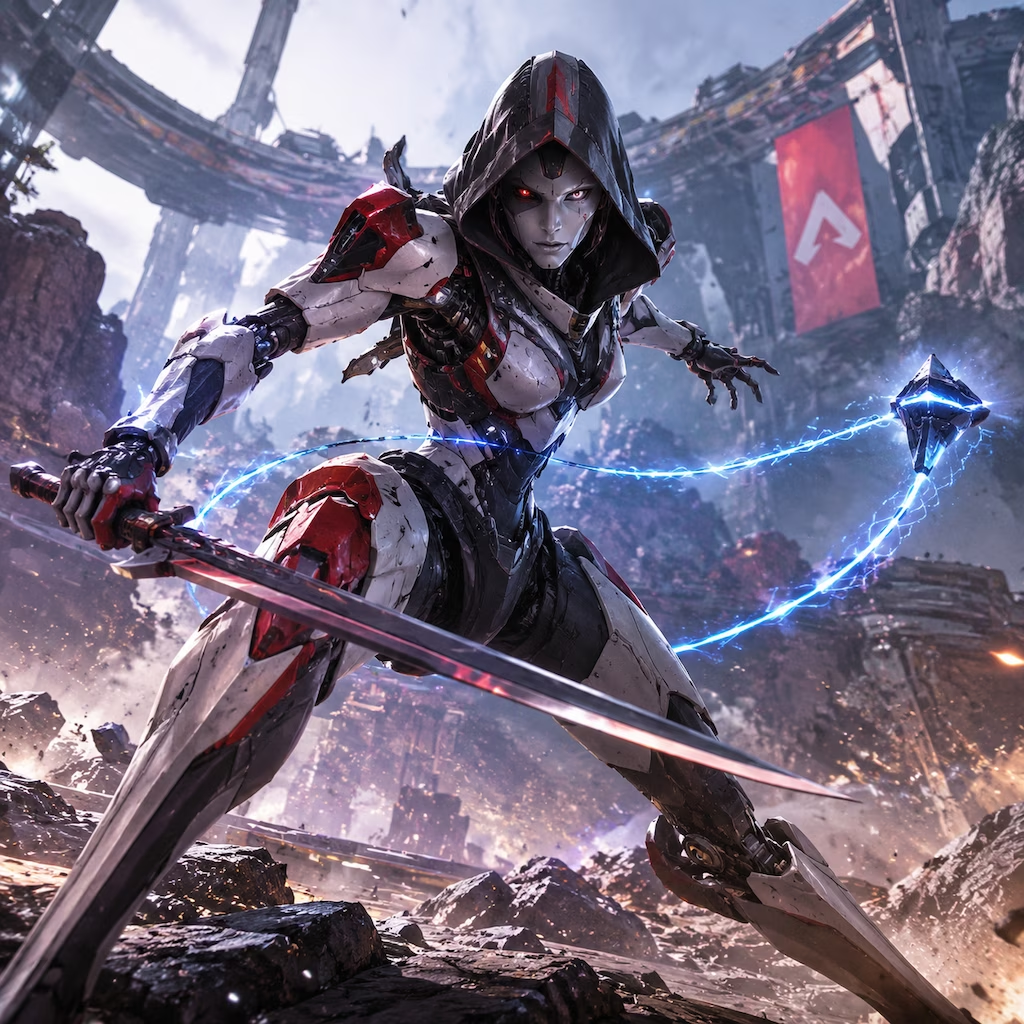
Apex Legends is a useful starting point because its ping system does a lot of heavy lifting. Everything from enemy here to a simple thank you for useful loot can be relayed without joining voice chat. Honestly, a well-designed ping wheel can carry an entire team. That is a big deal for players who prefer not to speak or cannot hear voice comms.
The Games That Put Captions on the Map
| Game | Accessibility strength | Remaining caveat |
|---|---|---|
| Apex Legends | Intuitive ping system and speech-to-text for voice chat | Accuracy depends heavily on teammate microphone quality |
| New World | Proximity voice chat supported by speech-to-text | Immersion can become noisy and chaotic |
| Sea of Thieves | Pirate-friendly proximity chat with captions | Limited visual cues for incoming projectiles and enemies |
| Gears 5 | Customizable subtitles and speech-to-text | Could benefit from stronger visual cues |
| No Man's Sky | Post-launch updates added speech-to-text | Context can get messy in a huge procedural universe |
| Back 4 Blood | Early speech-to-text with fairly accurate recognition | Slight delay between speech and captions |
| Halo Infinite | Customizable subtitles and multiplayer speech-to-text | Consistency across modes remains important |
| Rainbow Six Extraction | Team voice chat speech-to-text and adjustable subtitles | Feature not available in Siege's 5v5 PVP |
Apex Legends: The Ping System Does the Heavy Lifting
Among multiplayer shooters, Apex Legends remains a useful example because its communication tools are approachable. The ping system is intuitive, and speech-to-text gives players another route into team coordination. It is not perfect. Its accuracy seems largely tied to microphone quality, and captions can arrive with a delay. Still, in a pinch, having speech-to-text enabled is infinitely more helpful than silence. For Deaf and HOH players, that difference is not cosmetic. It is the difference between being present and being left out.
-2.jpg)
New World and Sea of Thieves: Proximity Chat With a Safety Net
New World brought proximity voice chat into an MMORPG, letting players hear nearby adventurers in their immediate area. The feature is immersive, but it can be troublesome for Deaf and HOH players. Speech-to-text is therefore crucial. It turns nearby chatter into readable text and keeps players connected to the social fabric of the world.
Sea of Thieves takes a similar approach. Yo-ho, a pirate's life should be for everyone, including Deaf and HOH gamers. Proximity voice chat makes the seas feel alive, and speech-to-text keeps players from being left out of the fun. The gap, however, is visual cues. The game could do more to signal incoming projectiles, approaching enemies, and other threats. Captions help with conversation. They do not replace a warning horn.
Gears 5, No Man's Sky, and Back 4 Blood: Progress With Caveats
Gears 5 took notes from other triple-A titles by offering customizable subtitles alongside speech-to-text for in-game voice chat. It is a clear step in the right direction. The game would still benefit from stronger visual cues for Deaf and HOH players, but the captioning option makes online play with friends and randoms easier.
No Man's Sky is another interesting case. Its rocky launch is well known, but a slew of updates greatly improved the procedural sci-fi survival game. Among those updates is a speech-to-text setting. Players who want to link up with a friend in a vast universe can now convert incoming voice chat into on-screen text. It is no small feat for a game of that scale.
Back 4 Blood made accessibility a priority from the start. A speech-to-text option for voice chat was available during its beta, and players reported that recognition quality was fairly accurate. There is still a slight delay between speech and translation, but the direction was promising. It gave players reason to hope that speech-to-text technology would keep improving.
Halo Infinite and Rainbow Six Extraction: The Newer Standard
Halo Infinite brought customizable subtitles for in-game dialogue and speech-to-text for incoming voice chat in multiplayer. The Halo franchise has a long legacy, and accessibility settings helped bring that legacy into the modern era. The goal, as Xbox's accessibility team framed it, was to make the journey into the Halo universe more accessible to as many gamers as possible, including newcomers and players who had previously faced barriers.
Rainbow Six Extraction pushed the conversation further. In a multiplayer PVE experience, communication is crucial to good teamwork. The game included speech-to-text for team voice chat, and it allowed players to adjust subtitle size, background color, and opacity. Those options matter because readability is personal. One player may need larger text; another may need a darker background. Rainbow Six Siege's 5v5 PVP experience did not include speech-to-text at the time, which showed that accessibility can still be uneven within a single franchise.
What Still Needs Work in 2026
By 2026, speech-to-text is no longer an experimental curiosity. Players expect it to be part of the conversation, especially in multiplayer games where voice chat shapes the experience. The remaining challenges are practical:
-
Accuracy in noisy lobbies. Captions must handle overlapping voices, poor microphones, and fast callouts.
-
Low latency. A warning that arrives three seconds late is not a warning. It is a postmortem.
-
Visual cues beyond captions. Deaf and HOH players need indicators for incoming fire, enemy footsteps, and environmental threats.
-
Customizable presentation. Subtitle size, color, opacity, and placement should be adjustable.
-
Consistency across modes. A feature that exists in one mode but not another sends a mixed message.
-
Clear onboarding. Players should be able to find and enable speech-to-text without digging through menus.
The question is no longer whether the feature exists. It is whether it works when the match gets loud. That is the standard 2026 should demand. Deaf and HOH gamers are not asking for a favor. They are asking for a seat at the same table, with the same information, in the same moment.
-2.jpg)
Accessibility is not a checklist. It is a living conversation between developers and players. The games above prove that speech-to-text can turn voice chat into a shared language. They also show how much work remains. In 2026, the bar should be higher, the captions should be clearer, and no player should have to choose between teamwork and understanding. 🎮",
"language": "en