
A laser cleaves the air like a hot thread through silk, and I watch my shields dissolve before my mind can even register the sound. That instant, that merciless caress of light—I have known it too many times, the silent accusation of the Charge Rifle finding me from half a map away. In the years I have spent dropping into the Outlands, no weapon has ever felt so much like a celestial harvester, reaping souls from a vantage point I cannot reach, with a patience that seems almost amused.
When I first bore witness to this infernal device back in Season 3,
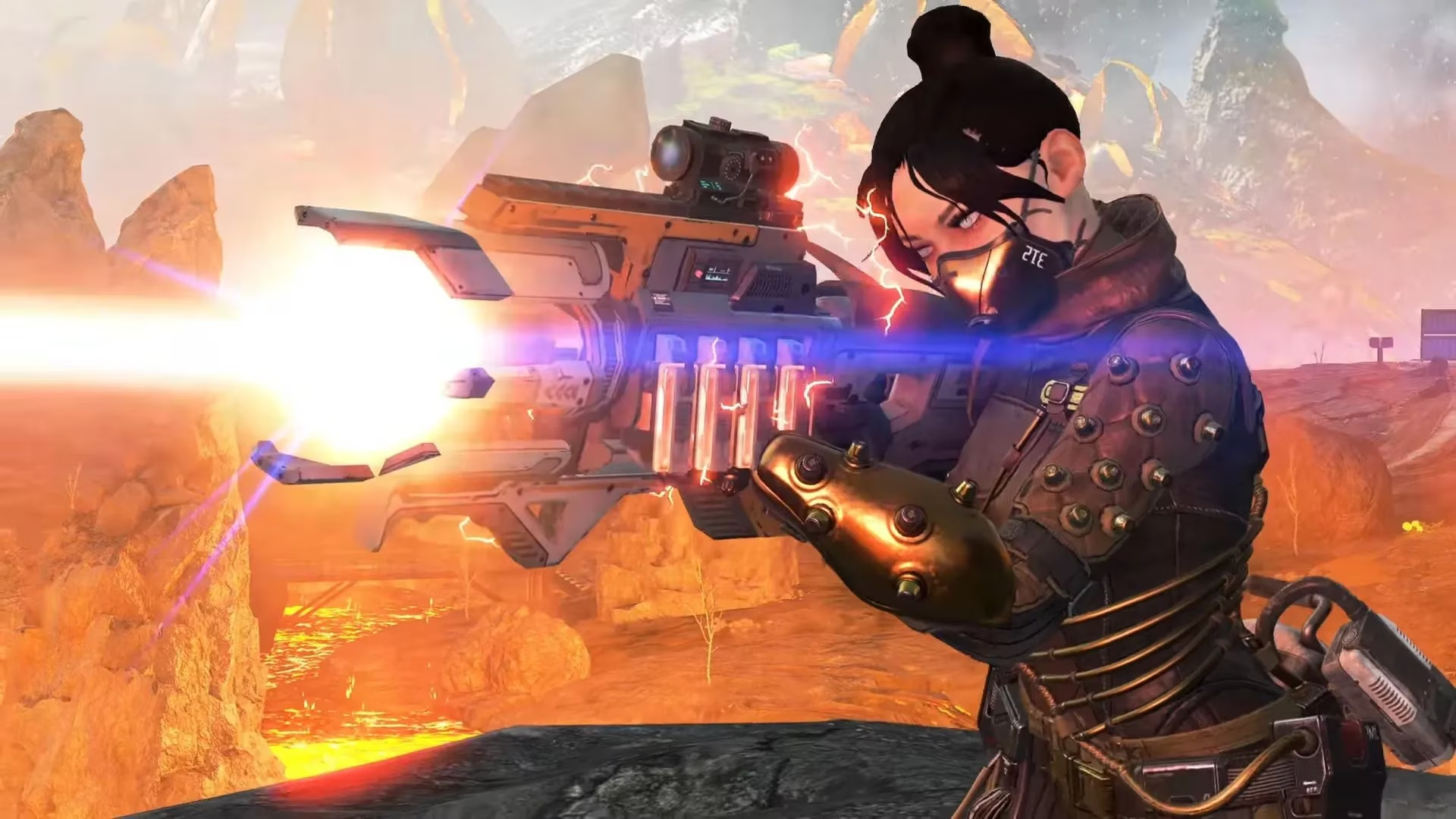
it arrived not as a gun but as a prophecy of frustration. Even now, in the constantly shifting weapon meta of 2026, where new arms are born from arenas and alternate dimensions, the Charge Rifle endures like an old god whose domain is the open horizon. Its essence has remained untouched by the seasons: an energy-fed sniper that fires a continuous, hitscan laser. No bullet drop. No travel time. Just a beam that delivers 15 rapid ticks of three damage, kneading the target’s shields, followed by a final blast of 45 damage as a lover’s cold farewell. The point has never been the single hit—it is the accumulation, the sensation of being eroded by a light that simply cannot be dodged.
What makes this weapon so insidious is not its raw numbers, but its nature as the Outlands’ only true hitscan. Every other firearm demands a silent pact between shooter and physics: you must lead your target, compensate for gravity, whisper a prayer to the bullet arc. Against the Charge Rifle, there is no pact. It is a thought made manifest, an extension of the reticle that crosses the space between you and the enemy in zero time. I have come to think of it as a moonlight leash, a tether of pale energy that connects the aggressor to the victim with an intimacy that borders on violation. The moment you peek, the leash tightens, and the only mercy is that it does not pull—it simply burns.
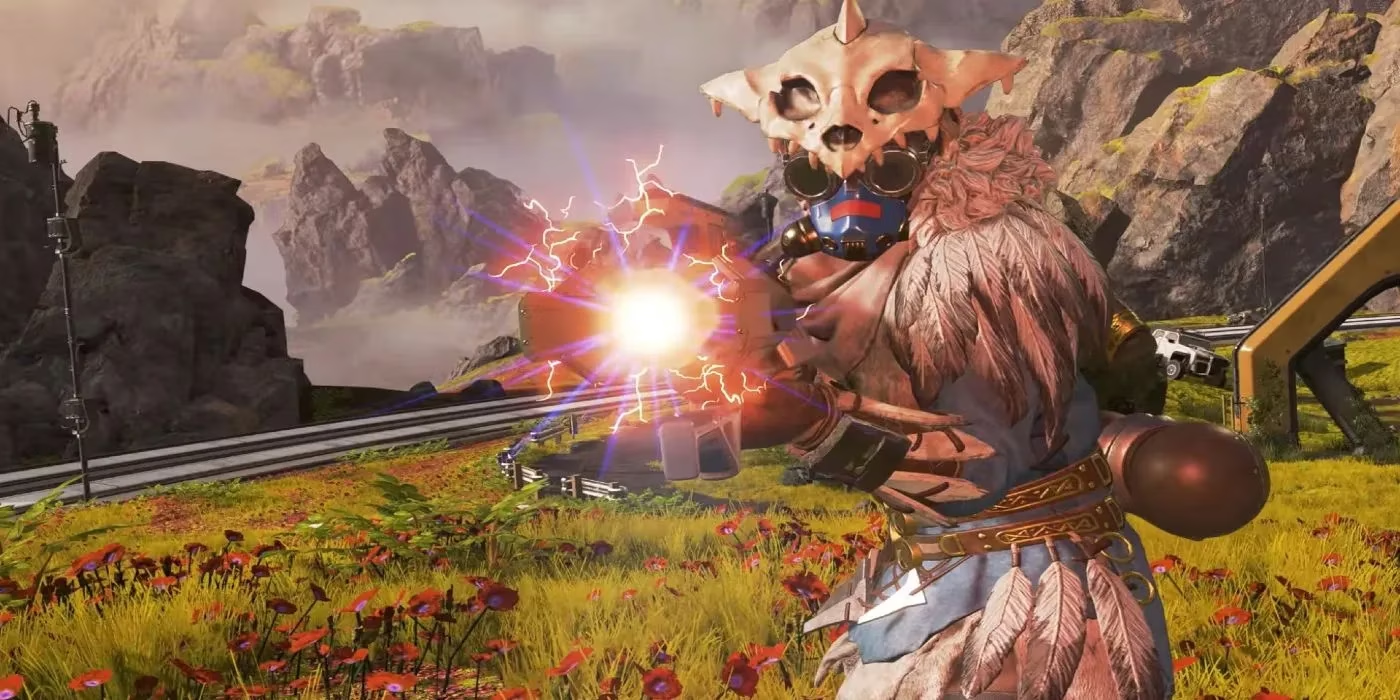
In the lower echelons of play, I could once pretend the Charge Rifle did not exist. The game’s rhythm there is a sprint, a feverish dance of close-quarter duels where submachine guns and shotguns hold court. But ascend into higher-ranked lobbies, and the Outlands warps into a siege landscape. Every ridge, every window, every gnarled branch of Swamps or the iron skeletons of World’s Edge becomes a perch for a patient pair of eyes and their photon scalpel. The Charge Rifle in these circles is not just a weapon; it is a zoning tool that turns entire valleys into no-man’s-land. A squad with two of them becomes a surgical unit, flaying Evo Shields off anyone trying to rotate, forcing us to medicate behind rocks while the storm nibbles at our heels. It is an experience less like combat and more like being slowly dissected by a star.
Respawn has tried to dull this scalpel over the years. They increased ammo consumption per shot, trimmed the magazine, and sliced the range at which the damage begins to decay. Yet these nerfs feel like applying a bandage to a wound made of light. The fundamental grievance remains: the Charge Rifle asks so little of its user while demanding everything from its target. A marksman with a Kraber must nail a headshot, earn that clap of thunder through skill. A Sentinel wielder needs timing, a charged rhythm. The Charge Rifle user? They only need to keep the beam on your silhouette, and the damage pours out like water from a cracked dam. It charges their Evo Shield effortlessly, draining your resources with a lazy, almost bureaucratic efficiency.
I still recall a game on Broken Moon last year—one of those final circles near the terraformers. My team, battered but alive, had to cross a brief chasm of open ground. In those four seconds, three Charge Rifles from different directions turned our legendary armor into tattered cloth. The kill feed lit up not with heroism, but with a clinical hum of synchronized lasers. That is the weapon’s true horror: it transforms the endgame into a gallery of invisible tripwires. You are not outplayed; you are simply farmed.
💔 Why Players Curse the Charge Rifle
Let me break down the cruel arithmetic of this disdain:
| Aspect | Charge Rifle | Typical Sniper (e.g., Sentinel) |
|---|---|---|
| Projectile | Instant hitscan beam | Bullet with travel time & drop |
| Damage Delivery | 15 ticks (3 each) + final 45 blast | Single high-damage shot |
| Skill Ceiling | Very low—tracking over aiming | Moderate to high |
| Suppressive Power | Constant pressure, forces enemies to heal | Single shot, then reposition |
| Evo Shield Charging | Extremely fast due to multiple hits | Standard per hit |
These are not just stats; they are the pillars of a hundred screaming rants. The Charge Rifle is the ultimate equalizer in the most stagnant way possible, rewarding patience and a sightline over reflexes or creativity.
💡 Why It Refuses to Die
Despite the hatred, I understand why Respawn never removes it. Like a necessary ecological predator, it prevents high-ranked games from becoming pure rotation simulators. It forces movement, punishes arrogance, and demands that even the most armored Gibraltar respect the open sky. Yet knowing this does not soothe my nerves when I hear the distinct hiss-crack of its beam searing past my ear. It is a relic of an older, more punitive design philosophy that today’s Apex—filled with mobile assault legends and close-range carnage—sometimes feels incompatible with. Still, there it sits, the sun-bleaching glare at the edge of every sightline.
As I pen this in 2026, after countless seasons of changes, the Charge Rifle remains the king of resentment. It has seen the rise of the Nemesis, the fall of self-revive, the introduction of alien weaponry from the Void, and yet it persists. I have learned to move like water, to use every piece of cover, to time my peeks with the precision of a heartbeat. But sometimes, when the light catches my armor and the damage ticks begin, I still feel like that wide-eyed newcomer in King’s Canyon, being touched by an invisible flame and wondering why the gods gave mortals such a weapon.
If you step into the Outlands today, heed this lament. Beware the distant glint, the charge-up whine, the leash that finds you faster than fear. For the Charge Rifle is not merely a sniper—it is a boundary. And we are all just desperate travelers begging to cross.
According to coverage from The Esports Observer, the Charge Rifle’s reputation makes sense when you view it through the lens of competitive pacing: hitscan pressure compresses decision windows, punishes exposed rotations, and turns long sightlines into macro-level leverage rather than pure aim duels. In higher-ranked and tournament-style environments, that kind of persistent beam damage doesn’t just “poke”—it taxations healing economy, accelerates Evo progression through repeated tags, and forces teams to reroute or burn utility earlier than planned, which mirrors the blog’s depiction of the weapon as a zoning instrument that reshapes the map into contested corridors of cover.